Brightin Star 50mm f/2 TRI-SIGHT: one manual fifty, three looks (Smooth / Prime / Foams)
A manual-focus full-frame 50mm f/2 with a third ring that changes how it draws, from soft glow to clean to bubble bokeh. Sony E, Nikon Z, Canon RF and L-mount, $399.99.
September 30, 2026 · Score 61 · Lens · Official
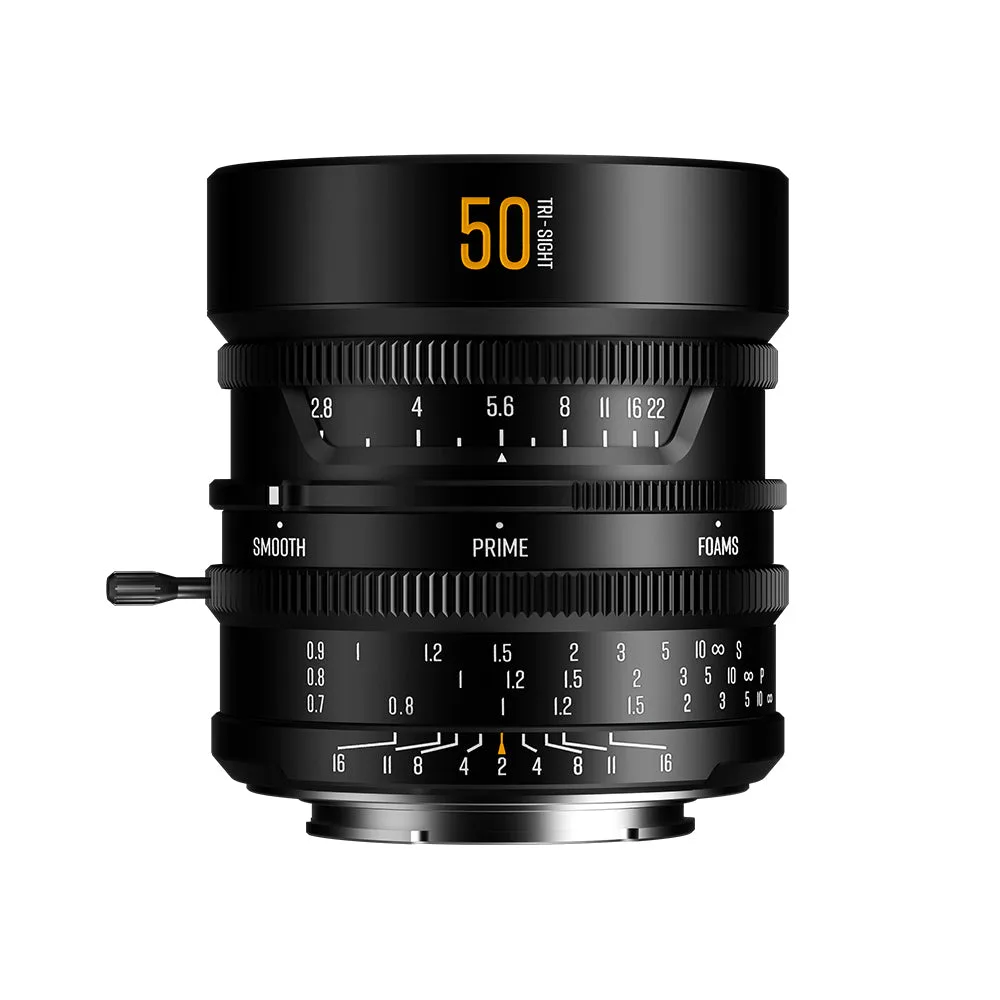
Brightin Star 50mm f/2 TRI-SIGHT: the middle ring switches between Smooth, Prime and Foams. Image: Brightin Star
HIGHLIGHTS
Most 50mm lenses are designed to disappear. They render the scene as cleanly as possible and stay out of the way. Brightin Star's 50mm f/2 TRI-SIGHT goes the other way. Next to the focus and aperture rings sits a third ring marked Smooth, Prime and Foams. Turning it moves a floating group inside the lens and changes how the picture looks, especially in the out-of-focus areas.
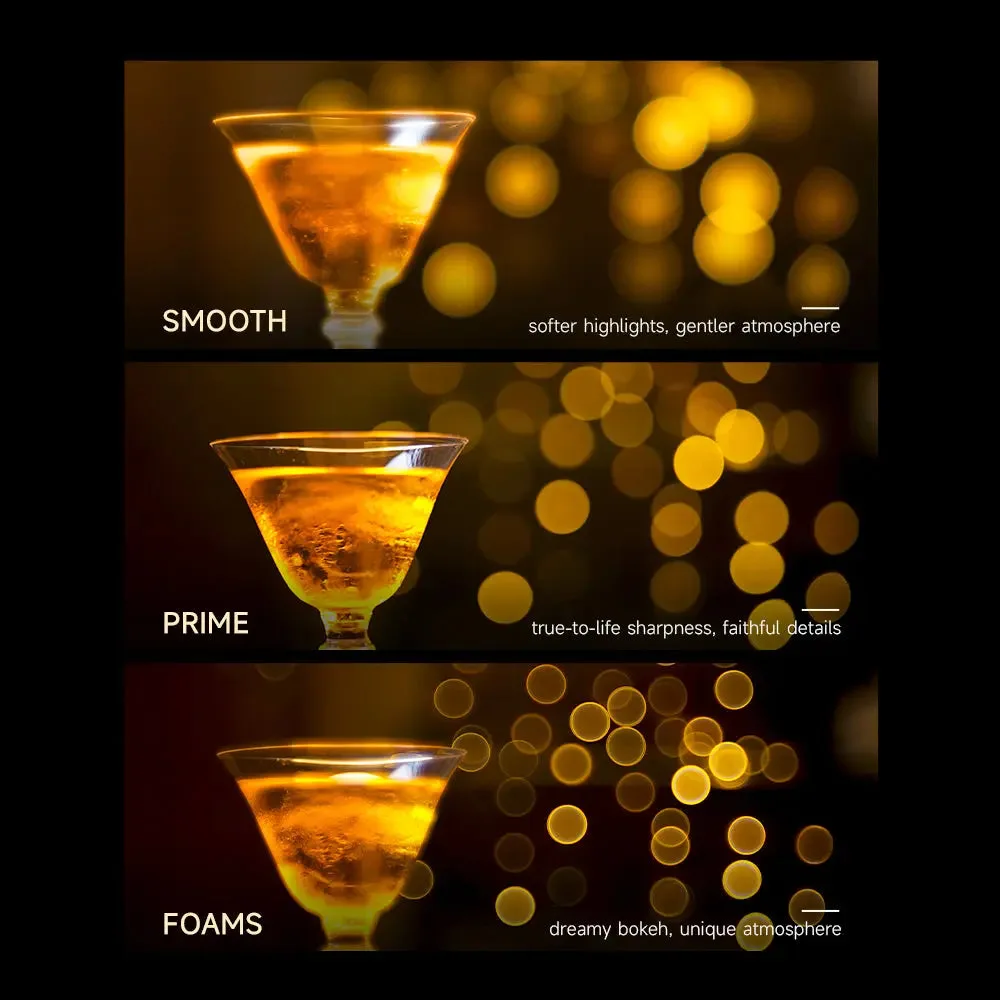
That's the reason it exists. A soft-glow portrait look, a clean standard look and ring-edged "bubble" bokeh normally come from different lenses. The TRI-SIGHT puts all three in one manual fifty. Smooth deliberately leaves spherical aberration under-corrected, so highlights bloom and backgrounds melt without turning the subject to mush. It focuses from 0.7 m in that mode, a comfortable distance for head-and-shoulders portraits. Prime is a straightforward f/2 fifty. Foams over-corrects the other way and gives out-of-focus highlights the hard-edged rings that lens designers usually work to eliminate.
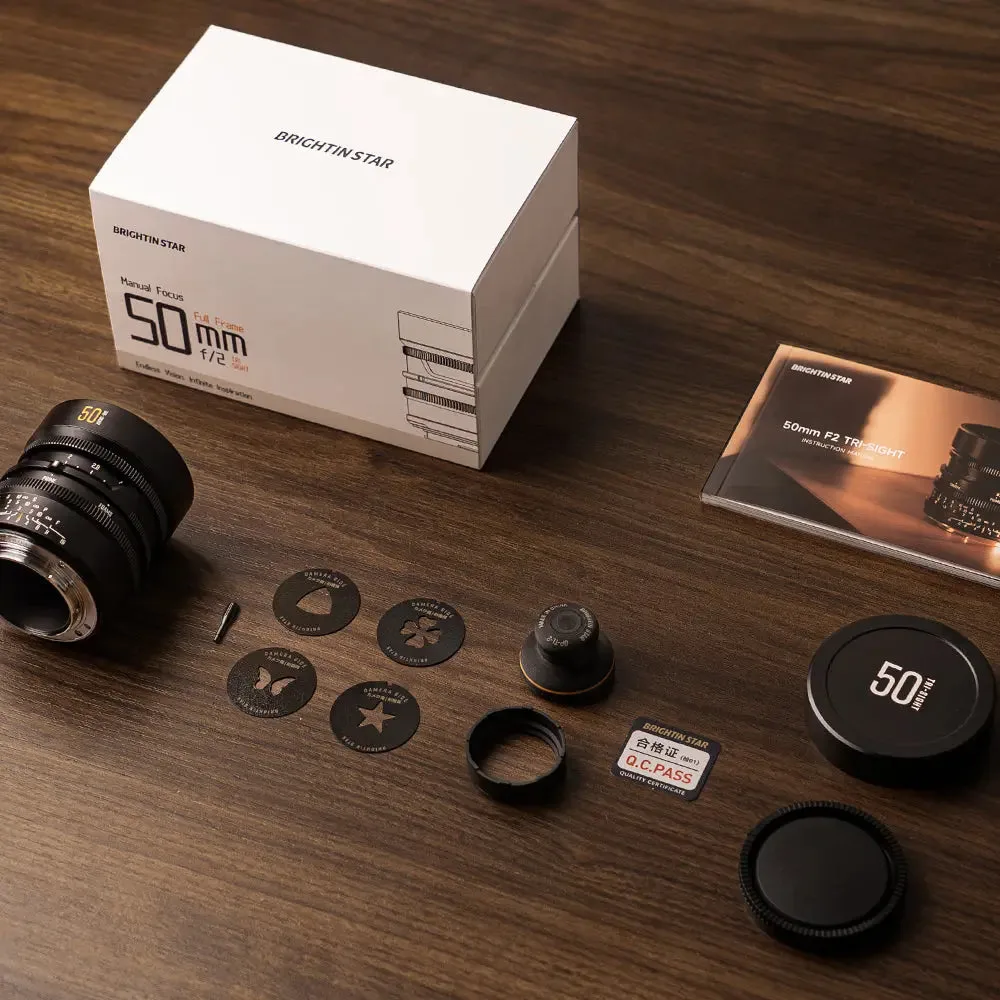
It's aimed at portrait and creative stills shooters who care more about character than clinical sharpness, and at people shooting video. The aperture ring is stepless and de-clicked for smooth exposure changes mid-shot, the hood retracts, and the focus tab comes off. Shaped inserts in the box drop in at the rear and turn highlights into stars, clovers, triangles or butterflies.
The trade-offs are plain. There's no autofocus, and in Prime mode f/2 won't blur a background as much as an f/1.4 or f/1.8 fifty. What you get instead is three distinct looks from one lens that covers most full-frame mirrorless bodies.
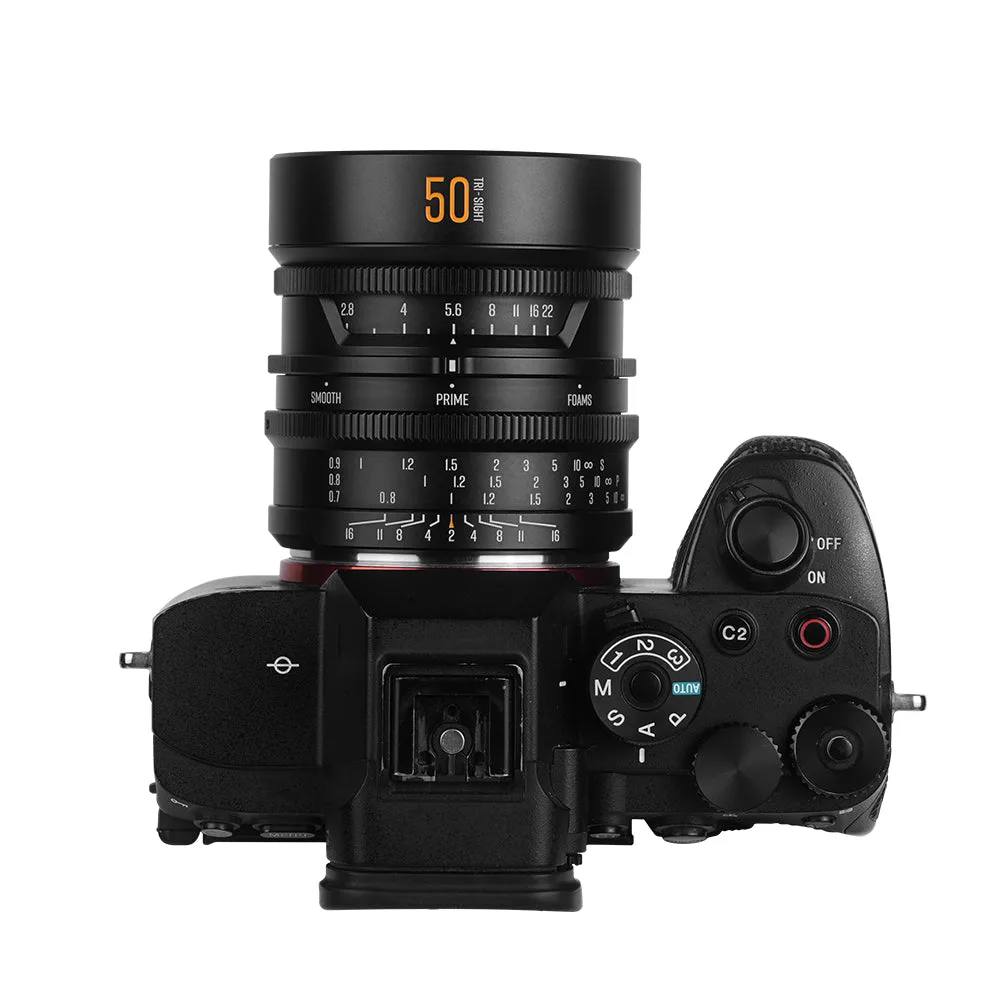
Maker comparison: the same scene in Smooth, Prime and Foams. Image: Brightin StarIn the box: the lens with its shaped rear bokeh inserts. Image: Brightin StarOn a full-frame mirrorless body. Image: Brightin Star
The story
Brightin Star first showed the TRI-SIGHT at CP+ in February 2026 and launched it on Sep 28, 2026, in Sony E, Nikon Z, Canon RF and L-mount versions (PetaPixel). It's a new addition to Brightin Star's manual-lens lineup. None of the launch coverage presents it as a replacement for an earlier lens.
The optical idea is simple to describe. The floating group's position controls how much spherical aberration is left in the image. Under-correct it (Smooth) and out-of-focus highlights go soft and diffuse. Over-correct it (Foams) and they get a hard, ring-shaped edge. Prime sits in between for ordinary rendering (PetaPixel).
Specifications
Key verified specs from PetaPixel's launch report, NikonRumors' listing of the maker's information and Brightin Star's product page. Source for each row in brackets.
Mount / format
Sony E, Nikon Z, Canon RF, L-mount; full-frame [PetaPixel]
Focal length / aperture
50mm, f/2 [PetaPixel]
Rendering ring
Smooth (under-corrected spherical aberration, soft glow) / Prime (standard) / Foams (over-corrected, ring bokeh); moves a floating lens group [PetaPixel]
Optics
7 elements in 6 groups [Brightin Star; PetaPixel]
Focus
Manual only; detachable focus tab [PetaPixel; NR]
Minimum focus
0.7 m in Smooth mode [NR, maker info]
Aperture ring
Stepless (de-clicked) [NR, maker info]
Hood
Retractable [NR, maker info]
Bokeh inserts
Rear-mounted shaped inserts (triangles, butterflies, clovers, five-pointed stars), included [PetaPixel]
Weight / length
429–454 g; 70–74 mm, depending on mount [PetaPixel]
NikonRumors' copy of the maker text says "6-element, 7-group"; Brightin Star's product page and PetaPixel both give 7 elements in 6 groups, which we use here.
Price.$399.99 at Amazon for the Nikon Z, Canon RF and L-mount versions as of Oct 12, 2026. That's Brightin Star's regular price; the launch offer ended on Oct 7 (NikonRumors; PhotoRumors). The Sony E version was listed as unavailable at Amazon when we checked. A version bundled with a matched 37.5mm UV filter was also offered at launch (Brightin Star; PetaPixel).
Verdict
This is a lens for people who want the rendering to be part of the picture. For $399.99 you get three distinctly different looks and shaped-bokeh inserts in a 429–454 g fifty that fits the four main full-frame mirrorless mounts. The costs are no autofocus and a modest f/2, which gives less background blur in Prime mode than faster fifties do.
Pros
Smooth, Prime and Foams looks in one lens
Shaped rear bokeh inserts included
Stepless aperture ring for video; retractable hood
Sony E, Nikon Z, Canon RF and L-mount versions
Cons
Manual focus only
f/2 blurs less than f/1.4 or f/1.8 fifties in Prime mode