Panasonic Lumix GH5 review: the 4K 60p Micro Four Thirds hybrid
Panasonic's Micro Four Thirds video hybrid from 2017; Panasonic has since announced the GH5 II. Launched at $1,999.99 (Panasonic, body only). Who it suits: video shooters, and macro and wildlife shooters who want strong stabilization and Micro Four Thirds lens reach.
October 22, 2026 · Camera · Review
Related on site: Another Micro Four Thirds body from the same era: our Olympus OM-D E-M1 Mark II review.
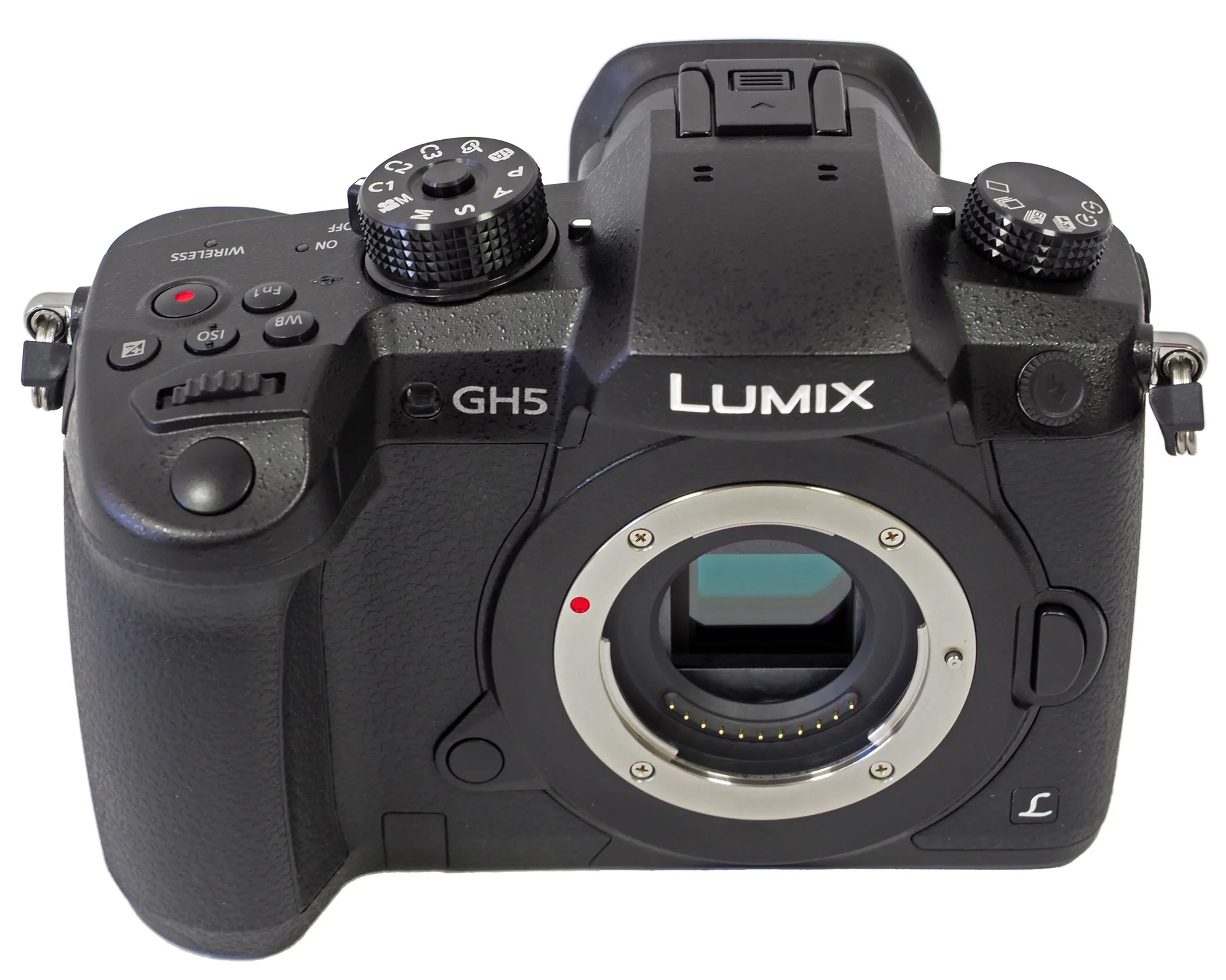
Panasonic Lumix GH5, front view. Photo: Bautsch via Wikimedia Commons, CC0 (resized)
HIGHLIGHTS
Why it exists. Panasonic's January 4, 2017 release is headlined "featuring the World's First 4K 60p/50p and 4K 30p 4:2:2 10-bit Video Recording Function" (Panasonic's wording, with its own footnotes). The release positions the GH5 as a hybrid: a 20.3MP sensor without a low-pass filter, 5-axis Dual I.S. 2, 6K PHOTO at 30 fps and dual UHS-II card slots.
Panasonic launched the GH5 in early 2017 at $1,999.99 as a Micro Four Thirds hybrid built around video: 4K at 60p, internal 4:2:2 10-bit recording, a full-size HDMI port and dual UHS-II card slots. For stills it brought 20.3MP without a low-pass filter, 5-stop in-body stabilization that combines with lens OIS, 12 fps bursts and 6K PHOTO, which pulls 18MP frames from 30 fps video. The 3,680k-dot finder and 3.2-inch free-angle screen are still usable. The trade-offs are contrast-based AF (Panasonic's DFD system) rather than phase detection, and a 725 g ready-to-shoot weight for a Micro Four Thirds body. Panasonic announced the GH5 II on May 25, 2021.
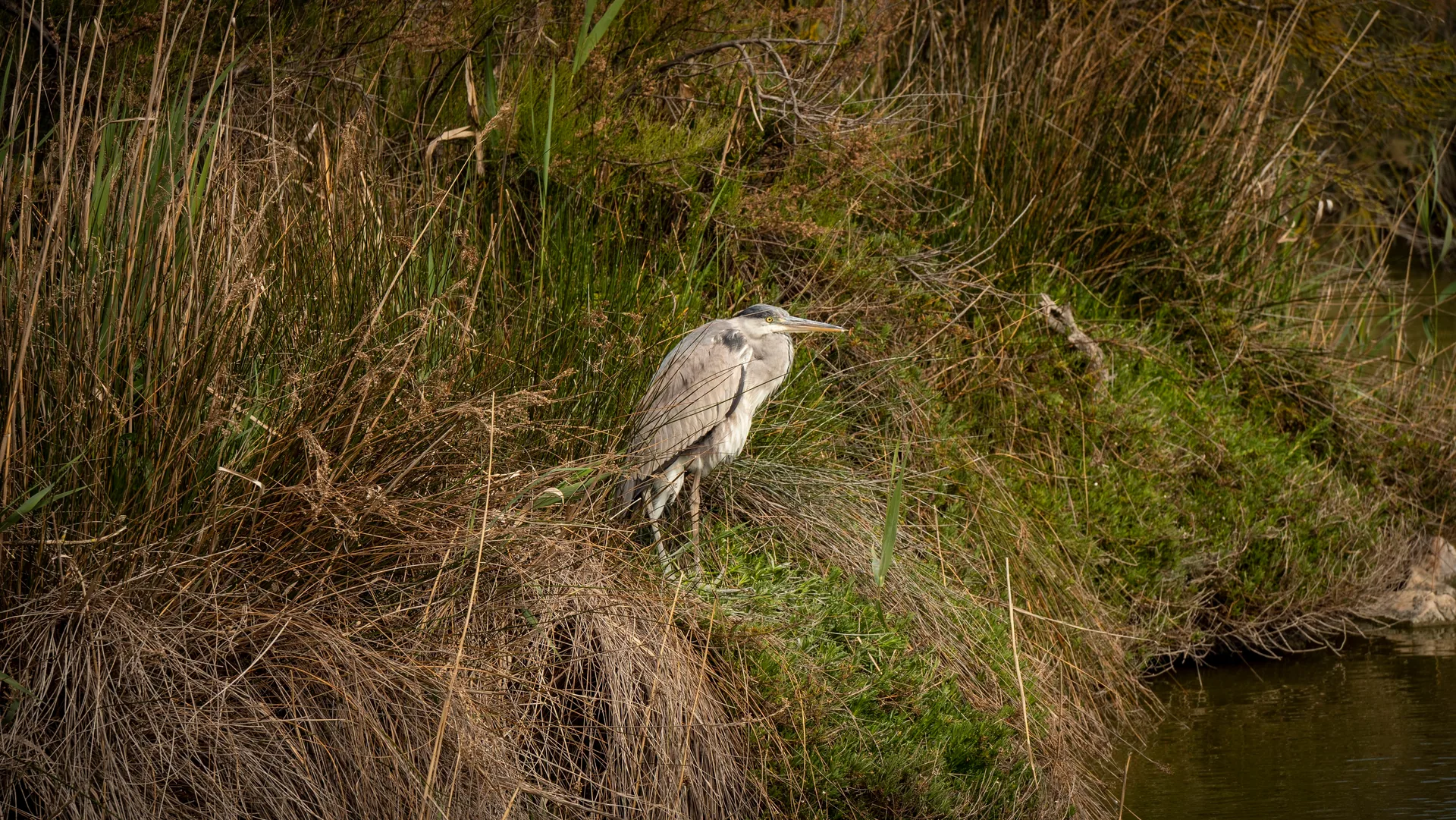
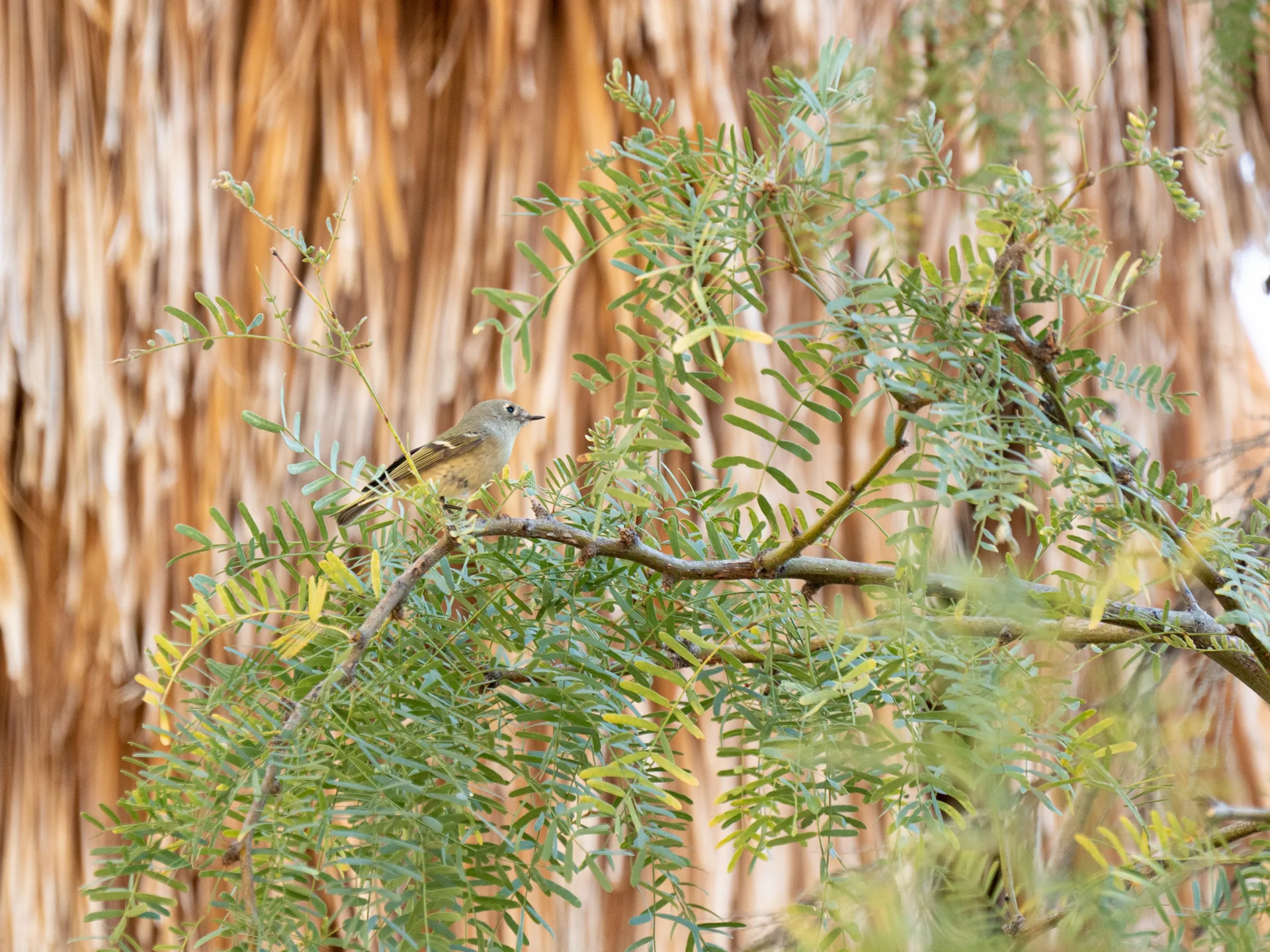
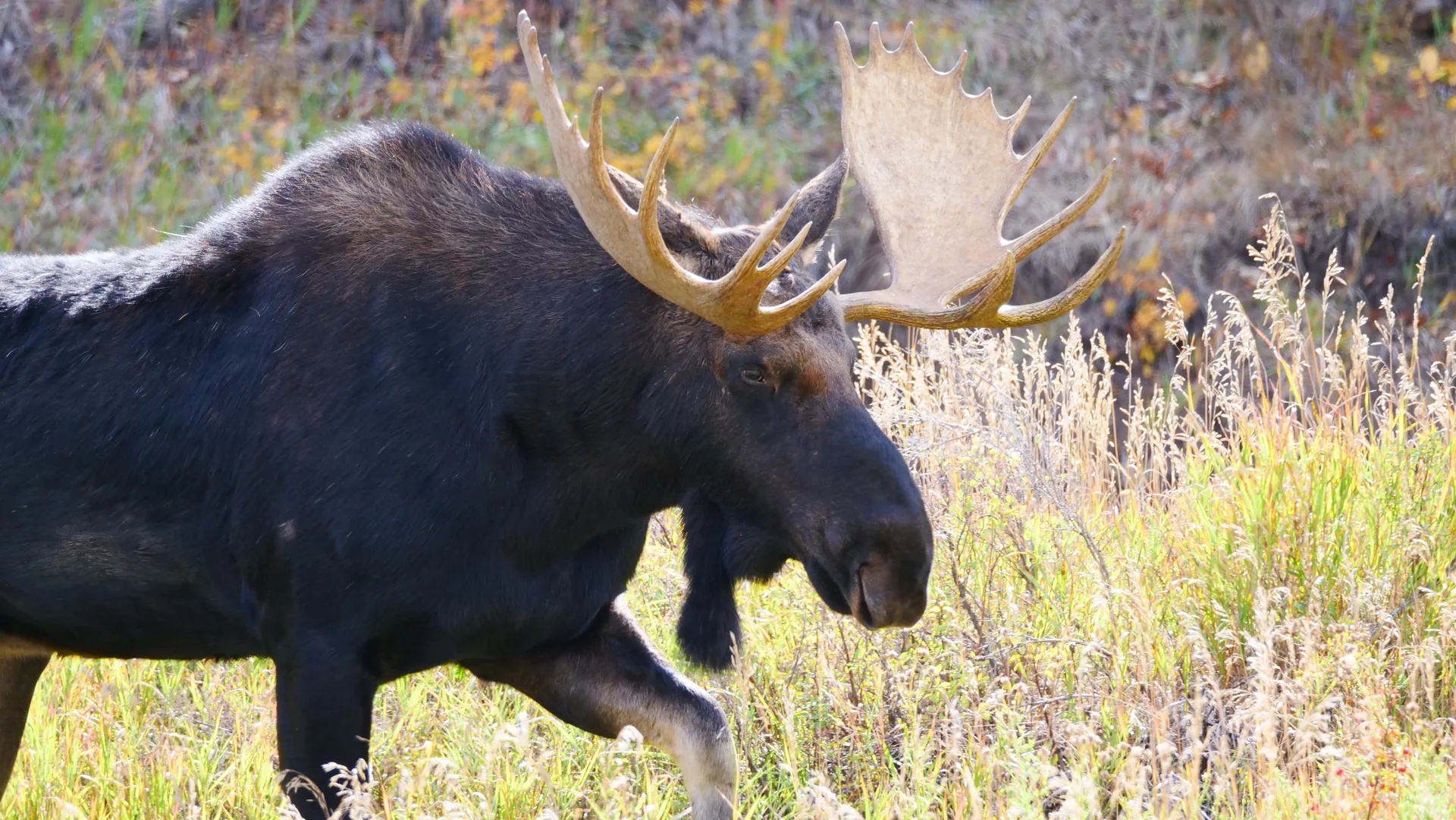
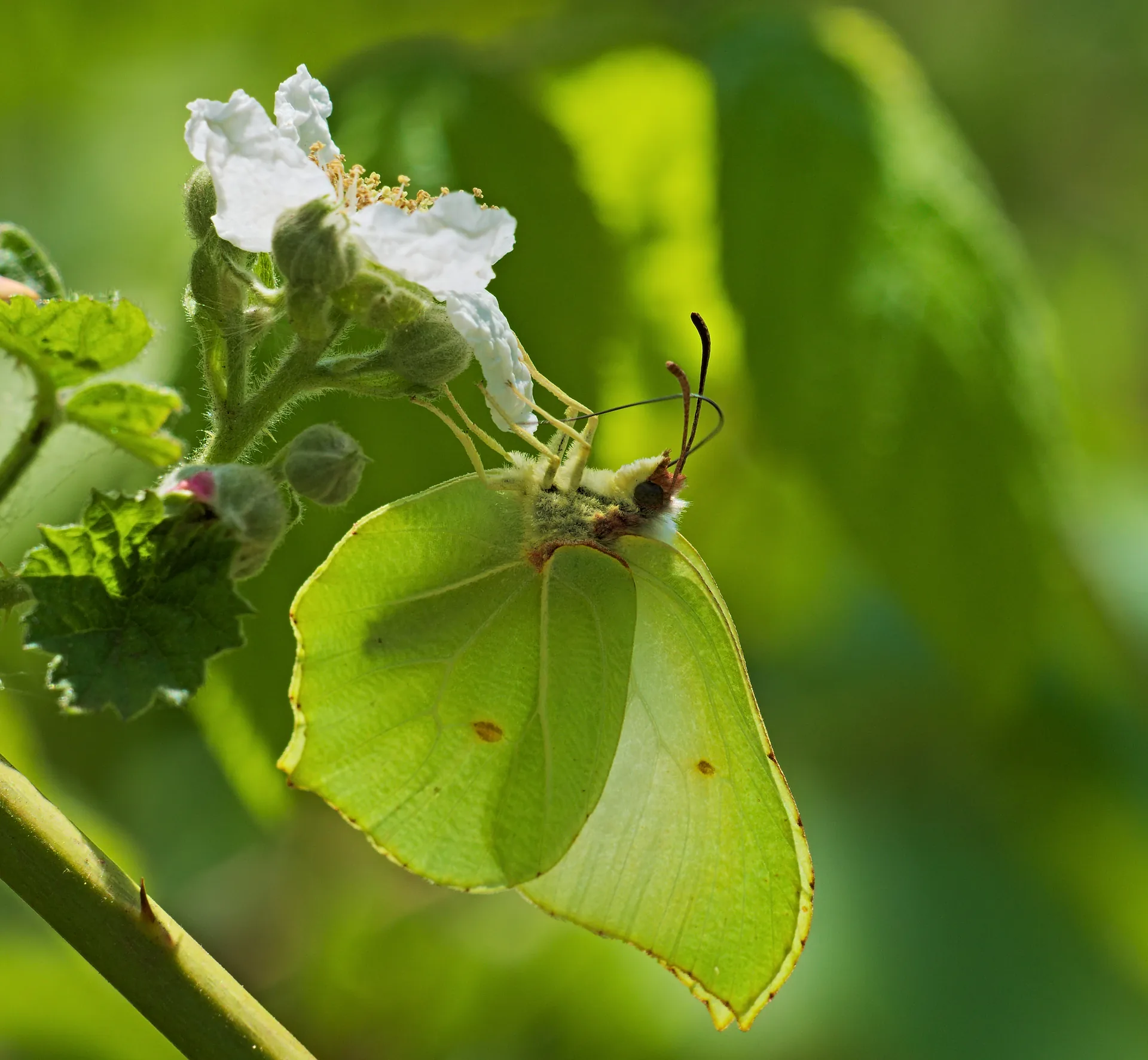
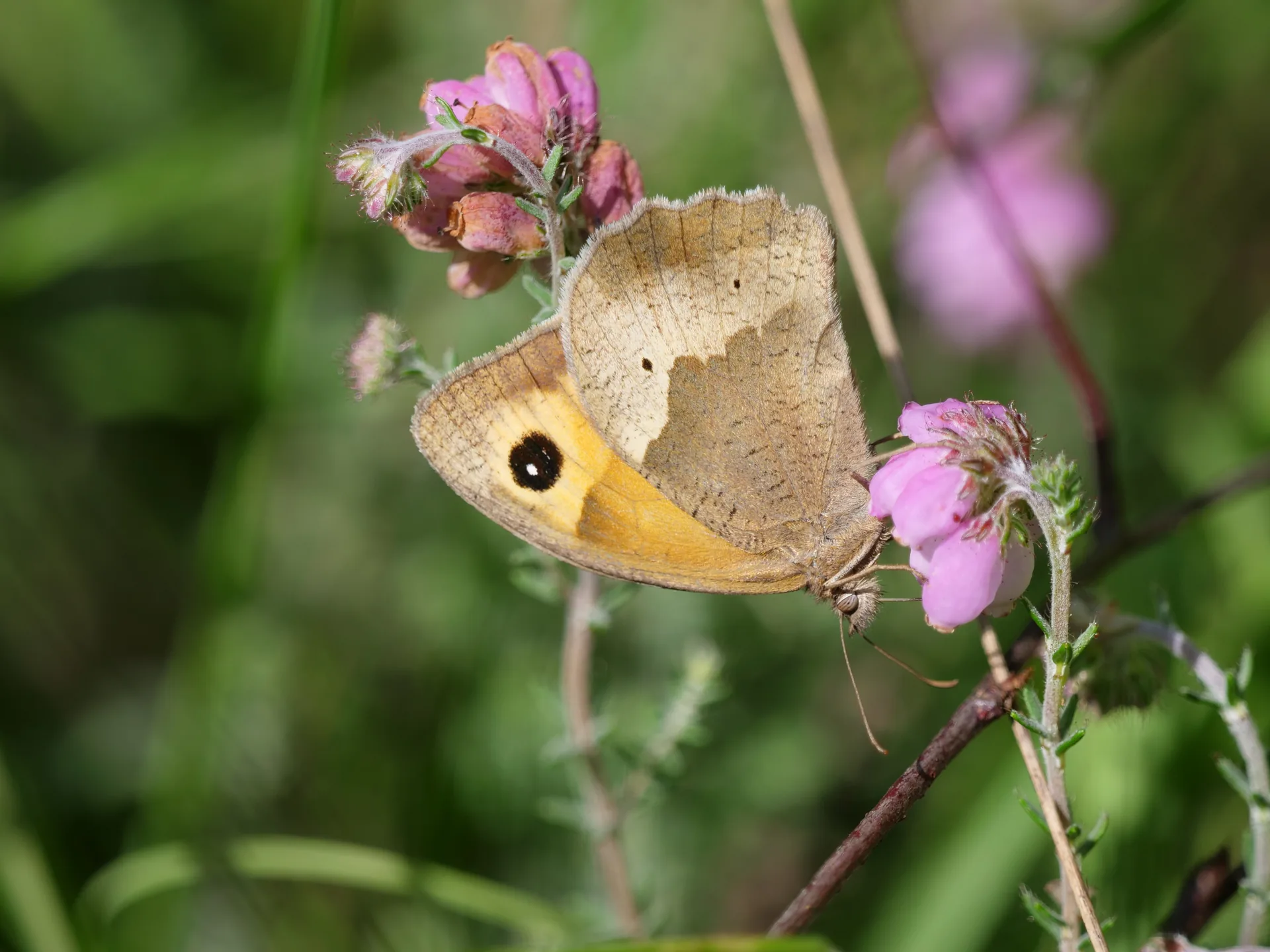
Our gallery comes from six photographers: a grey heron in the Camargue, a ruby-crowned kinglet, a bull moose, a brimstone butterfly, a meadow brown and a fly agaric. Who should buy it? Video shooters, and macro and wildlife shooters who want the stabilization and Micro Four Thirds lens reach. Its limits: contrast-based AF and 725 g with card and battery.
The story
Panasonic announced the Lumix GH5 on January 4, 2017, at $1,999.99 body-only, with availability in late March 2017 (Panasonic via PR Newswire).
Panasonic North America's specifications page lists the full figures, including 12 fps bursts, the 3,680k-dot OLED finder and the CIPA battery ratings (Panasonic specifications).
Panasonic announced a successor model, the GH5M2 (GH5 II), on May 25, 2021 (Panasonic via PR Newswire).
Specifications
Key specs for the Panasonic Lumix GH5, from Panasonic North America's DC-GH5 Features and Specifications page and Panasonic's January 4, 2017 release. Source for each row in brackets.
Sensor
20.33MP effective Live MOS, 17.3 × 13.0 mm (Micro Four Thirds); no low-pass filter [Panasonic]
ISO (stills)
200–25600; extended 100 [Panasonic]
ISO (movies)
200–12800 (Creative Video mode); extended 100 [Panasonic]
Autofocus
Contrast AF with DFD; 225 areas; −4 to 18 EV [Panasonic]
4K 60p/50p; 4:2:2 10-bit (4K 60p is 4:2:0 8-bit to card); V-Log L with a paid upgrade key [Panasonic]
Card / ports
Dual SD (UHS-II); USB-C (USB 3.1 Gen 1); HDMI Type A; Wi-Fi 802.11a/b/g/n/ac; Bluetooth 4.2 [Panasonic]
Battery
7.2 V 1860 mAh; CIPA about 410 (rear monitor) / 400 (LVF) / 1,000 (Power Save LVF), with the 12-60mm [Panasonic]
Size / weight
138.5 × 98.1 × 87.4 mm; about 725 g with card and battery (646 g body only); operating −10 to 40 °C [Panasonic]
Announced / price
Jan 4, 2017; $1,999.99 body-only (US); available late March 2017 [Panasonic]
Sample photos
Six photos taken with the Panasonic Lumix GH5 by six photographers, shared on Wikimedia Commons under Creative Commons licenses or in the public domain. Each caption gives the settings the file records. Select a photo to enlarge it. More samples from Wikimedia Commons
f/5.6, ISO 200, 1/500 s, 100mm: a grey heron in the Camargue wetland (LUMIX G VARIO 35-100/F2.8II). Photo: RESTORE4Cs via Wikimedia Commons, CC BY 4.0 (resized)f/5.5, ISO 200, 1/125 s, 125mm: a ruby-crowned kinglet at Cottonwood Springs, Joshua Tree (LUMIX G VARIO 14-140/F3.5-5.6). Photo: Joshua Tree National Park via Wikimedia Commons, public domain (resized)
f/5.6, ISO 800, 1/640 s, 250mm: a bull moose on the National Elk Refuge (Panasonic GH5). Photo: USFWS Mountain Prairie via Wikimedia Commons, public domain (resized)f/13, ISO 400, 1/250 s, 400mm: a female brimstone butterfly (Panasonic GH5). Photo: Andreas Eichler via Wikimedia Commons, CC BY-SA 4.0 (resized)
f/6.3, ISO 200, 1/800 s, 400mm: a meadow brown butterfly (Panasonic GH5). Photo: Tsugakuh via Wikimedia Commons, CC BY-SA 4.0 (resized)f/5.2, ISO 100, 1/40 s, 228mm: a fly agaric in a German forest reserve (Panasonic GH5). Photo: Leonhard Lenz via Wikimedia Commons, CC BY-SA 4.0 (resized)
Panasonic: Launched at $1,999.99 in 2017 (US, body only).
Verdict
Who it's for: video shooters, and macro and wildlife shooters, who want 4K 60p, internal 10-bit and strong stabilization in a Micro Four Thirds body.
Want phase-detect AF and faster bursts in Micro Four Thirds? See our Olympus OM-D E-M1 Mark II review.