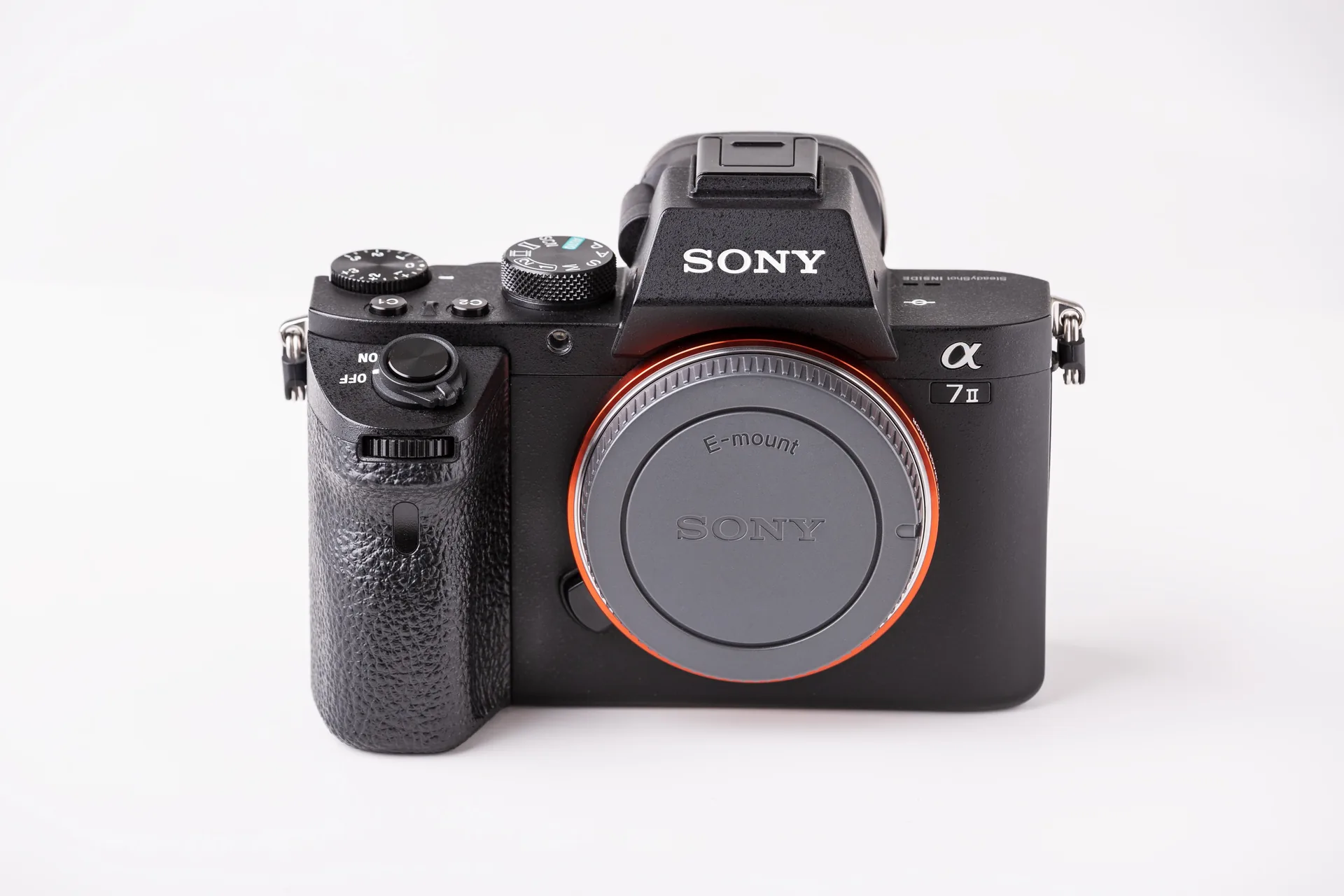
Sony's second-generation basic a7 (ILCE-7M2), now discontinued. Launched at $1,700 in 2014 (body only). Still good in 2026: yes, for landscapes, travel and adapted manual lenses.
Sony a7 II (ILCE-7M2), body with body cap. Photo: Roman Eisele via Wikimedia Commons, CC BY-SA 4.0 (resized)
HIGHLIGHTS
Sony Electronics introduced the a7 II in the US on November 26, 2014, body-only for $1,700 or $2,000 with the FE 28-70mm kit lens. Sony called it the world's first full-frame camera with 5-axis image stabilization: the 24.3MP sensor itself moves to correct pitch, yaw, X/Y shift and roll, rated at up to 4.5 steps. Autofocus uses 117 phase-detection and 25 contrast-detection points, with AF/AE tracking at up to 5 fps.
Why it exists. The a7 II turned the original a7 into a stabilized full-frame body. Because the stabilization is in the body, it also works with lenses that have none, including A-mount lenses on an adapter. Sony added the XAVC S codec at 50 Mbps, S-Log2, a larger shutter button moved forward on a deeper grip, and magnesium alloy for the top, front cover and internal frame. Sony Japan now lists it as discontinued, so this is a Classic.
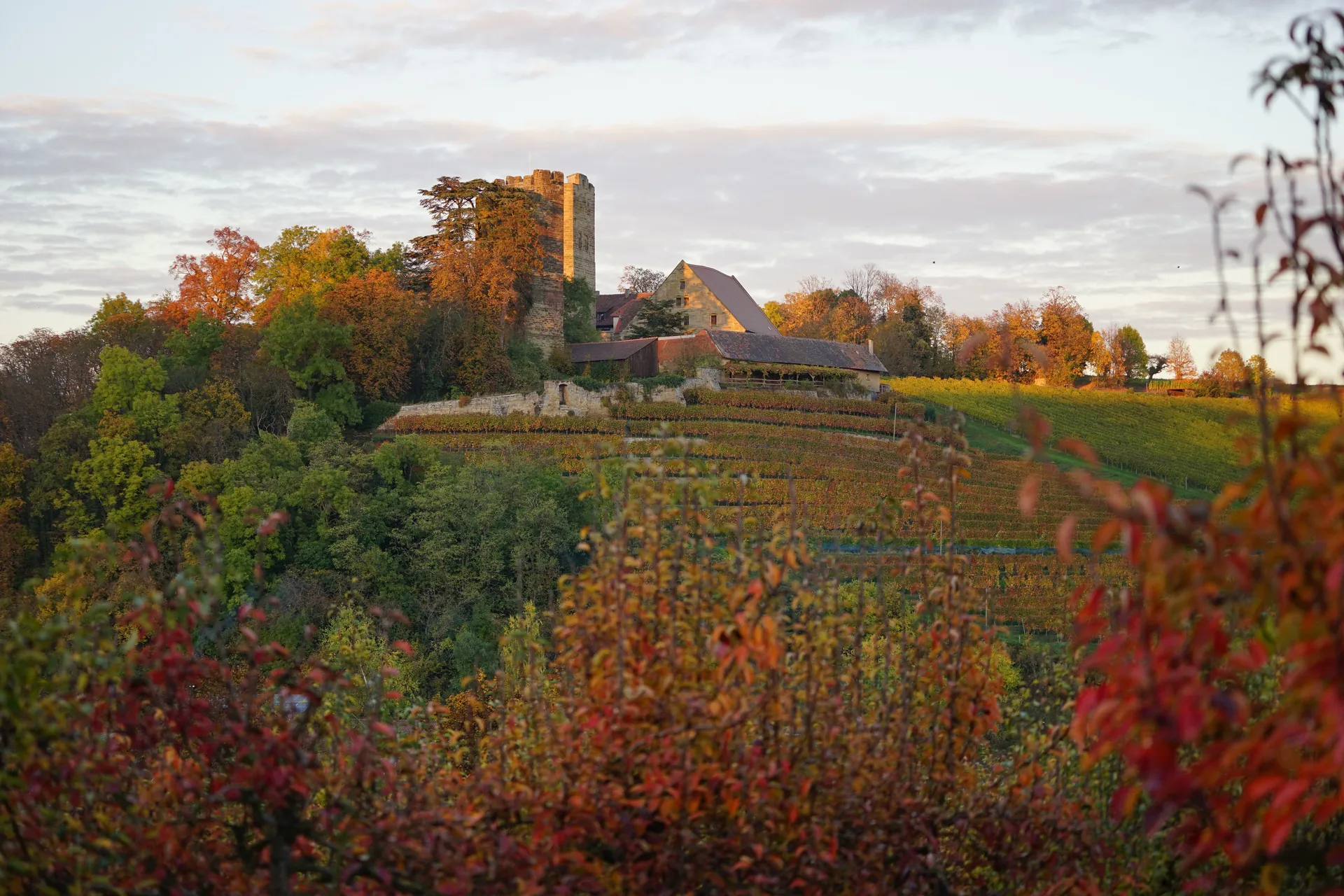
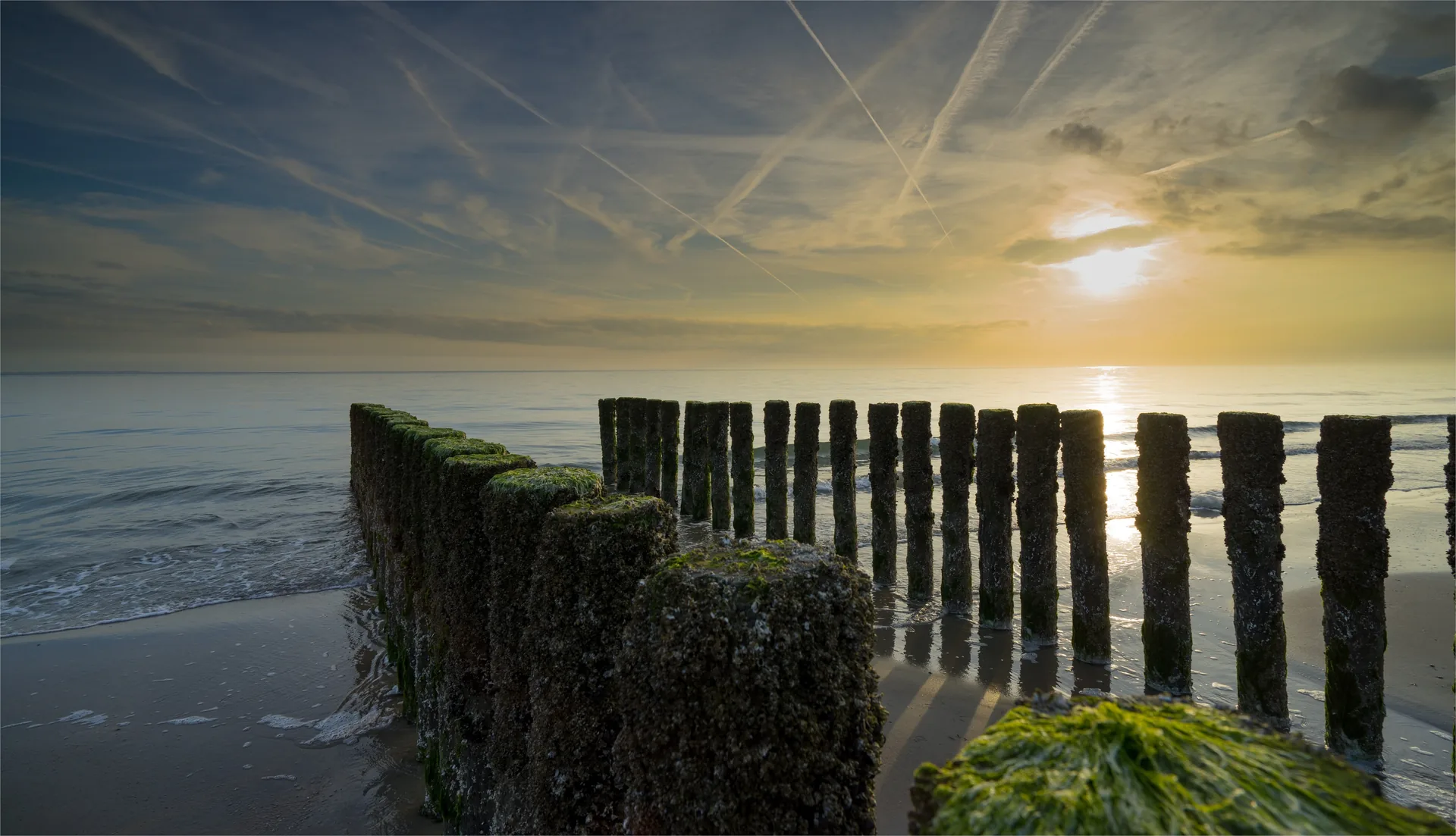
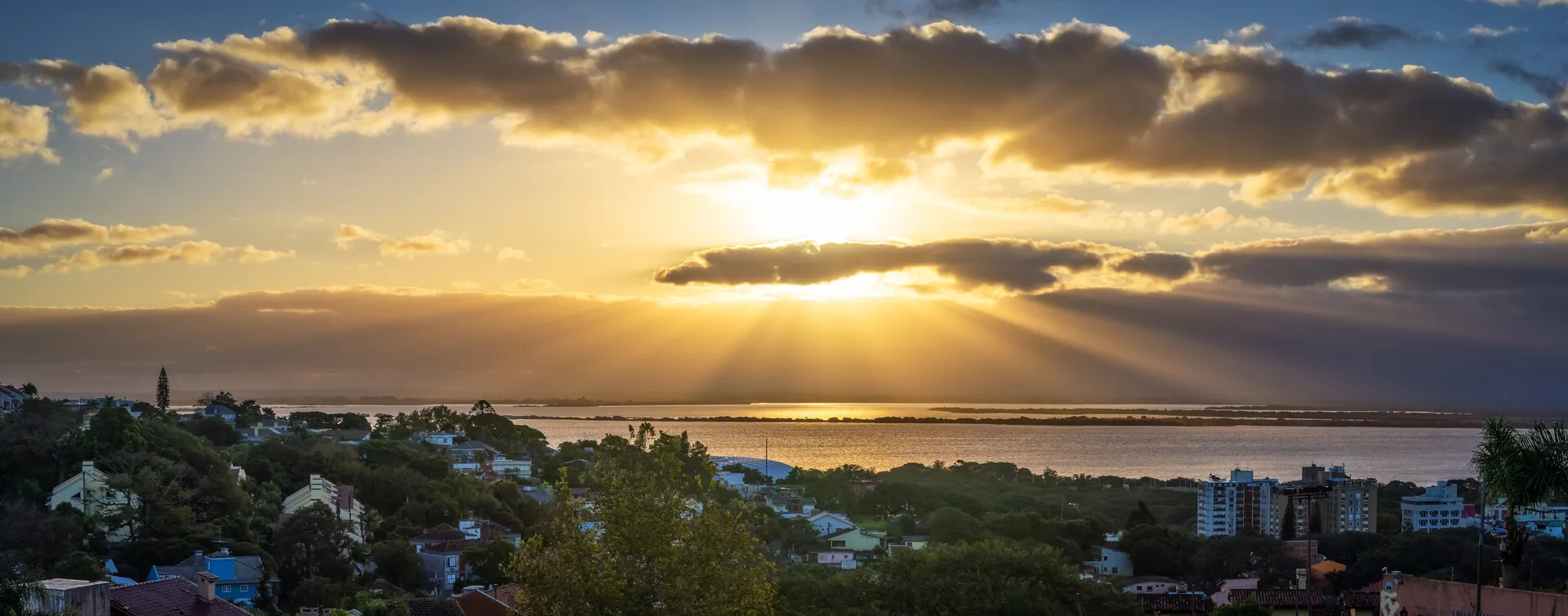
Our gallery comes from five photographers: Neipperg Castle above autumn vineyards, a field scabious flower, the Seeleinsee lake in the Hagengebirge, wooden groynes at sunset, a railway arch bridge in the Netherlands and a wide panorama over the Guaíba. Still good in 2026? Yes, if you shoot landscapes, travel or manual-focus lenses and can live with 5 fps, Full HD video, one card slot and a small battery.
The story
Sony Europe announced the α7 II on November 20, 2014 as "the World's First Full-Frame Camera with Optical 5-Axis Image Stabilization" (Sony Europe).
Sony Electronics followed on November 26, 2014 with US details: on sale from December 9 body-only for $1,700, or as a kit with the FE 28-70mm F3.5-5.6 OSS for $2,000. The release claimed about 30% faster AF response and 1.5 times more accurate tracking than the original α7, and about 40% faster start-up (Sony Electronics).
Sony Japan now marks the ILCE-7M2 as discontinued (Sony Japan).
Specifications
Key specs for the Sony a7 II, from Sony Europe's November 20, 2014 release, Sony Electronics' November 26, 2014 release and Sony's ILCE-7M2 specifications. Source for each row in brackets.
100–25600; expandable to 50; Multi Frame NR to 51200 [Sony Europe]
Autofocus
Fast Hybrid AF: 117 phase-detection + 25 contrast-detection points; EV −1 to 20 [Sony Europe, Sony Electronics]
Stabilization
5-axis sensor-shift; up to 4.5 steps (CIPA, Sonnar T* FE 55mm F1.8 ZA) [Sony Europe]
Bursts
Up to 5 fps (Hi) / 2.5 fps (Lo) with AF/AE tracking [Sony Europe, Sony Electronics]
Shutter
1/8000–30 s, bulb; electronic front curtain shutter [Sony Europe]
Viewfinder
OLED, 2,359,296 dots, about 0.71x [Sony Europe]
Screen
3.0-type tilting White Magic TFT, 1,228,800 dots [Sony Europe]
Video
Full HD; XAVC S at 50 Mbps, AVCHD and MP4; S-Log2 and S-Gamut; time code [Sony Europe, Sony Electronics]
Card
One slot: Memory Stick PRO Duo / SD (UHS-I) [Sony Europe]
Battery
NP-FW50; about 350 shots with the rear screen (CIPA) [Sony]
Build
Magnesium-alloy top, front cover and internal frame; Wi-Fi and NFC [Sony Europe, Sony Electronics]
Weight
About 599 g with battery and Memory Stick PRO Duo; about 566 g body only [Sony Europe]
Announced / price
Nov 20, 2014 (Europe); $1,700 body-only (US, Nov 26, 2014) [Sony Europe, Sony Electronics]
Sample photos
Six photos taken with the Sony a7 II by five photographers, shared on Wikimedia Commons under Creative Commons licenses or in the public domain. Each caption gives the settings the file records. Select a photo to enlarge it. More samples from Wikimedia Commons
f/4, ISO 400, 1/250 s, 75mm: Neipperg Castle above autumn vineyards, Germany (Sony FE 70-200mm F4 G OSS). Photo: Roman Eisele via Wikimedia Commons, CC BY-SA 4.0 (resized)f/11, ISO 1600, 1/250 s, 90mm: a field scabious flower (Sony FE 90mm F2.8 Macro G OSS). Photo: Roman Eisele via Wikimedia Commons, CC BY-SA 4.0 (resized)
f/11, ISO 100, 1/125 s, 36mm: the Seeleinsee lake in the Hagengebirge (Sony Vario-Tessar T* FE 24-70mm F4 ZA OSS). Photo: Günter Seggebäing, Coesfeld via Wikimedia Commons, CC BY-SA 3.0 (resized)f/9, ISO 100, 1/100 s, 16mm: wooden groynes at sunset (Sony Vario-Tessar T* FE 16-35mm F4 ZA OSS). Photo: Norbert Reimer via Wikimedia Commons, CC BY-SA 2.0 (resized)
ISO 100, 1/250 s: a railway arch bridge in the Netherlands (lens and aperture not recorded). Photo: Rob Kemme via Wikimedia Commons, CC BY-SA 2.0 (resized)ISO 100, 1/800 s: a wide panorama of the sun through clouds over the Guaíba (lens and aperture not recorded). Photo: Felipe Valduga via Wikimedia Commons, CC BY 2.0 (resized)
Sony: Launched at $1,700 in 2014 (US, body only).
Verdict
Who it's for: landscape, travel and street shooters who want full-frame files and in-body stabilization, including with adapted manual-focus lenses.
Look elsewhere if you shoot sports, wildlife, events or video: the a7 III adds 693-point AF with Eye AF, 10 fps, 4K and two card slots.