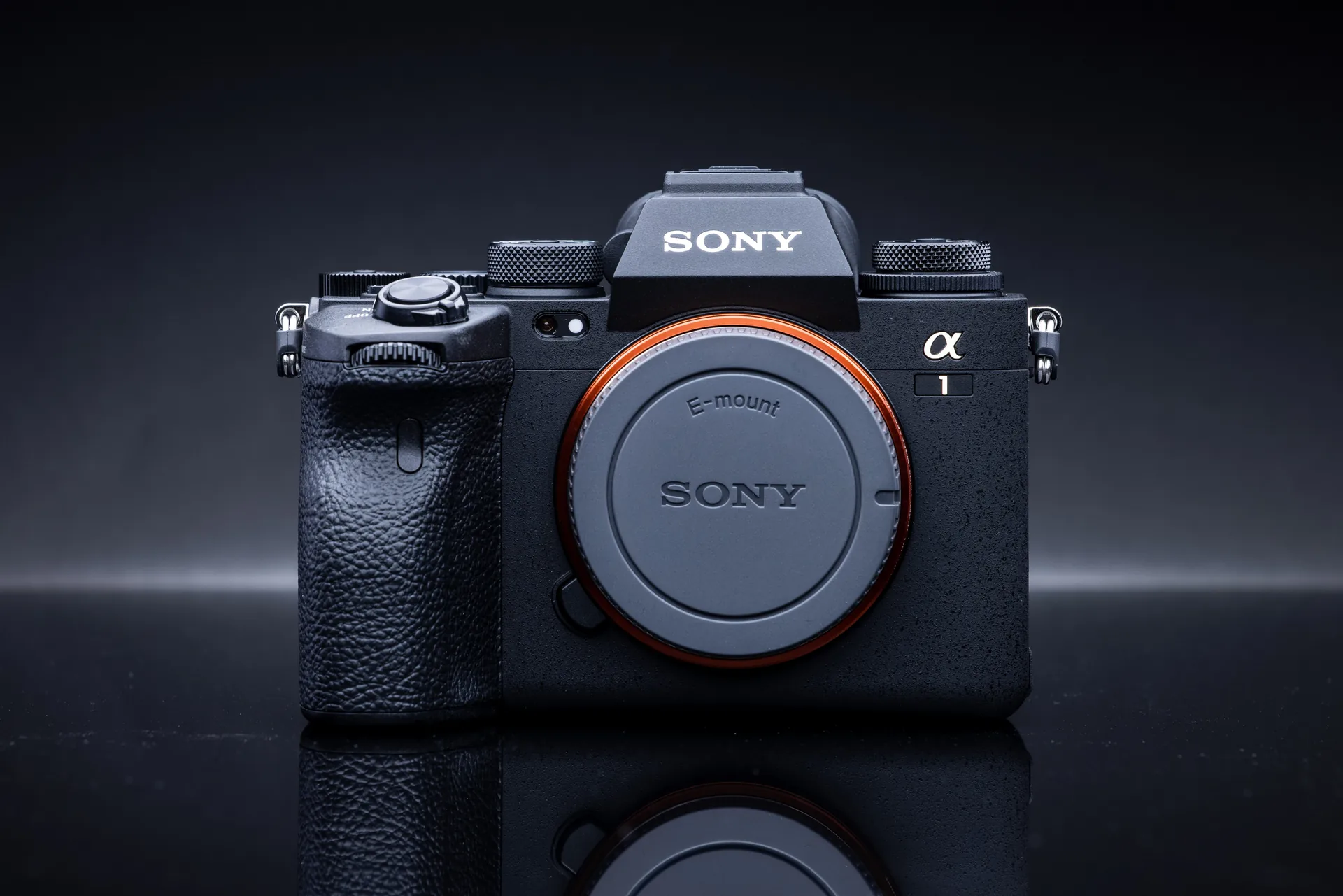
Sony's first Alpha 1, launched in 2021 at $6,500 (body only). Who it suits: wildlife, sports and event shooters who want 50MP and 30 fps in one body and do not need the a1 II's newer autofocus tools.
October 24, 2026 · Camera · Review
Related on site: The second generation: our Sony a1 II review. A high-resolution Sony for slower subjects: our Sony a7R V review.
The Sony a1 (ILCE-1), front view. Photo: Henry Söderlund via Wikimedia Commons, CC BY 2.0 (resized)
HIGHLIGHTS
Why it exists. Sony built the Alpha 1 so professionals would not have to pick between a high-resolution body and a fast one. Its January 26, 2021 release calls it "an unprecedented combination of resolution, speed and video performance", and Neal Manowitz, then deputy president for Imaging Products and Solutions Americas at Sony Electronics, said it "breaks through all existing boundaries, setting a new bar for what creators can accomplish with a single camera."
The core is a 50.1MP full-frame stacked Exmor RS sensor with the BIONZ XR engine: blackout-free shooting at up to 30 fps, up to 120 AF/AE calculations per second, 8K 30p 10-bit 4:2:0 video and 4K 120p 10-bit 4:2:2. Those headline numbers carry over to the a1 II. What the a1 II adds is a dedicated AI processing unit for subject recognition, Pre-Capture of up to 1 second, stabilization rated up to 8.5 stops and revised ergonomics.
Is it still worth it? If you shoot fast subjects and want 50MP files, the original still delivers the same resolution and frame rate, and it is still sold new. On the used market it now trades far below its launch price: in a September 2026 Fred Miranda wanted-to-buy thread, the buyer's budget was $2,700. Pick the a1 II if you want its AI subject recognition, Pre-Capture and stronger stabilization. Our gallery comes from three photographers: wildlife on the FE 200-600mm, two Milky Way frames in the Swiss Alps, and a daylight scene on the FE 24-70mm.
The story
Sony Electronics announced the Alpha 1 on January 26, 2021, for availability in March 2021 at approximately $6,500 USD ($8,500 CAD) (Sony Electronics).
The release lists a 9.44 million-dot OLED viewfinder with a refresh rate of up to 240 fps, 759 phase-detection AF points covering about 92% of the frame, Real-time Eye AF for humans, animals and, for the first time in an Alpha camera, birds, and mechanical-shutter flash sync up to 1/400 sec. It also lists electronic-shutter flash sync up to 1/200 sec., a Pixel Shift Multi Shooting mode that composites 16 frames into a 199MP image, and 1000BASE-T Ethernet.
Sony's footnotes matter for buyers: 30 fps is the "Hi+" mode, and the maximum is 20 fps when shooting uncompressed or lossless compressed RAW. 8K 30p can be recorded continuously for about 30 minutes in Sony's internal tests. We leave out weight and battery figures because we did not verify them.
Specifications
Key specs for the Sony a1 (ILCE-1), from Sony Electronics' January 26, 2021 release.
759 phase-detection points, approx. 92% coverage; Real-time Eye AF for humans, animals and birds; up to 120 AF/AE calculations per second [Sony release]
Bursts
Up to 30 fps blackout-free (electronic shutter, "Hi+"); 20 fps max. with uncompressed or lossless compressed RAW [Sony release]
Flash sync
Up to 1/400 sec. (mechanical shutter); up to 1/200 sec. (electronic shutter) [Sony release]
Stabilization
5-axis in-body, up to 5.5 steps (CIPA) [Sony release]
0.64-type OLED, approx. 9.44 million dots, up to 240 fps refresh, 0.90x magnification [Sony release]
Screen
3.0-type touch LCD, approx. 1.44 million dots [Sony release]
Cards
Dual slots; both take CFexpress Type A or SD (UHS-I/UHS-II) [Sony release]
Connectivity
Wi-Fi 2.4/5 GHz, USB Type-C (SuperSpeed USB 10Gbps), 1000BASE-T Ethernet, full-size HDMI Type-A [Sony release]
Announced / price
Jan 26, 2021; $6,500 (US, body only), available March 2021 [Sony release]
Sample photos
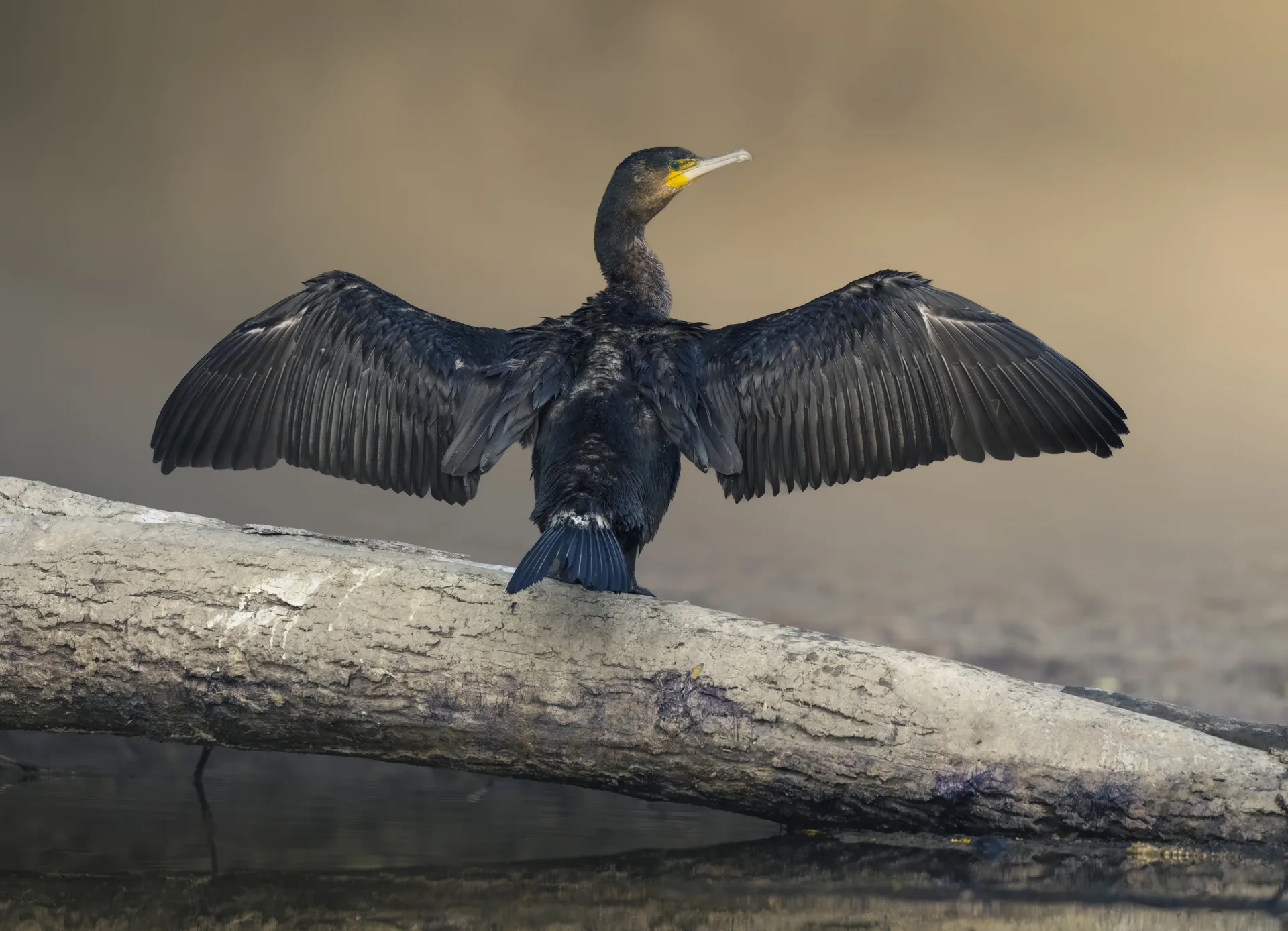
Five photos taken with the Sony a1 by three photographers, shared on Wikimedia Commons under Creative Commons licenses. Select a photo to enlarge it. More samples from Wikimedia Commons
A mandarin duck taking off (FE 200-600mm F5.6-6.3 G OSS, 1/2000 s). Photo: Roman.ubl via Wikimedia Commons, CC BY-SA 4.0 (resized)A cormorant drying its wings (FE 200-600mm F5.6-6.3 G OSS, 1/2000 s). Photo: Roman.ubl via Wikimedia Commons, CC BY-SA 4.0 (resized)The Milky Way aligned with the Matterhorn, reflected in the Stellisee (FE 24mm F1.4 GM, 8 s, ISO 3200). Photo: Giles Laurent via Wikimedia Commons, CC BY-SA 4.0 (resized)The Milky Way during the Perseids, seen from the Oeschinensee (FE 24mm F1.4 GM, 8 s, ISO 6400). Photo: Giles Laurent via Wikimedia Commons, CC BY-SA 4.0 (resized)Fort Totten Historic Site (Sony FE 24-70mm F2.8, f/8, ISO 100). Photo: Richard N Horne via Wikimedia Commons, CC BY-SA 4.0 (resized)
Sony: Launched at $6,500 in 2021 (US, body only).
Verdict
Who it's for: wildlife, sports and event shooters who want 50MP files and 30 fps bursts in one body, especially if a used or discounted a1 fits the budget where the a1 II does not.
Want the newer AI autofocus, Pre-Capture and stronger stabilization? See our Sony a1 II review.
Strengths
50.1MP stacked sensor with blackout-free bursts up to 30 fps
Real-time Eye AF for humans, animals and birds; 759 phase-detection points
8K 30p and 4K 120p 10-bit 4:2:2; dual CFexpress Type A/SD slots
Flash sync up to 1/400 sec. with the mechanical shutter
Ethernet and fast Wi-Fi for press and sports workflows
Trade-offs
$6,500 at launch, body only
No AI processing unit or Pre-Capture; those arrived with the a1 II
Stabilization rated up to 5.5 steps, versus up to 8.5 stops on the a1 II
The fastest modes need CFexpress Type A cards, and full 30 fps is not available with uncompressed or lossless RAW