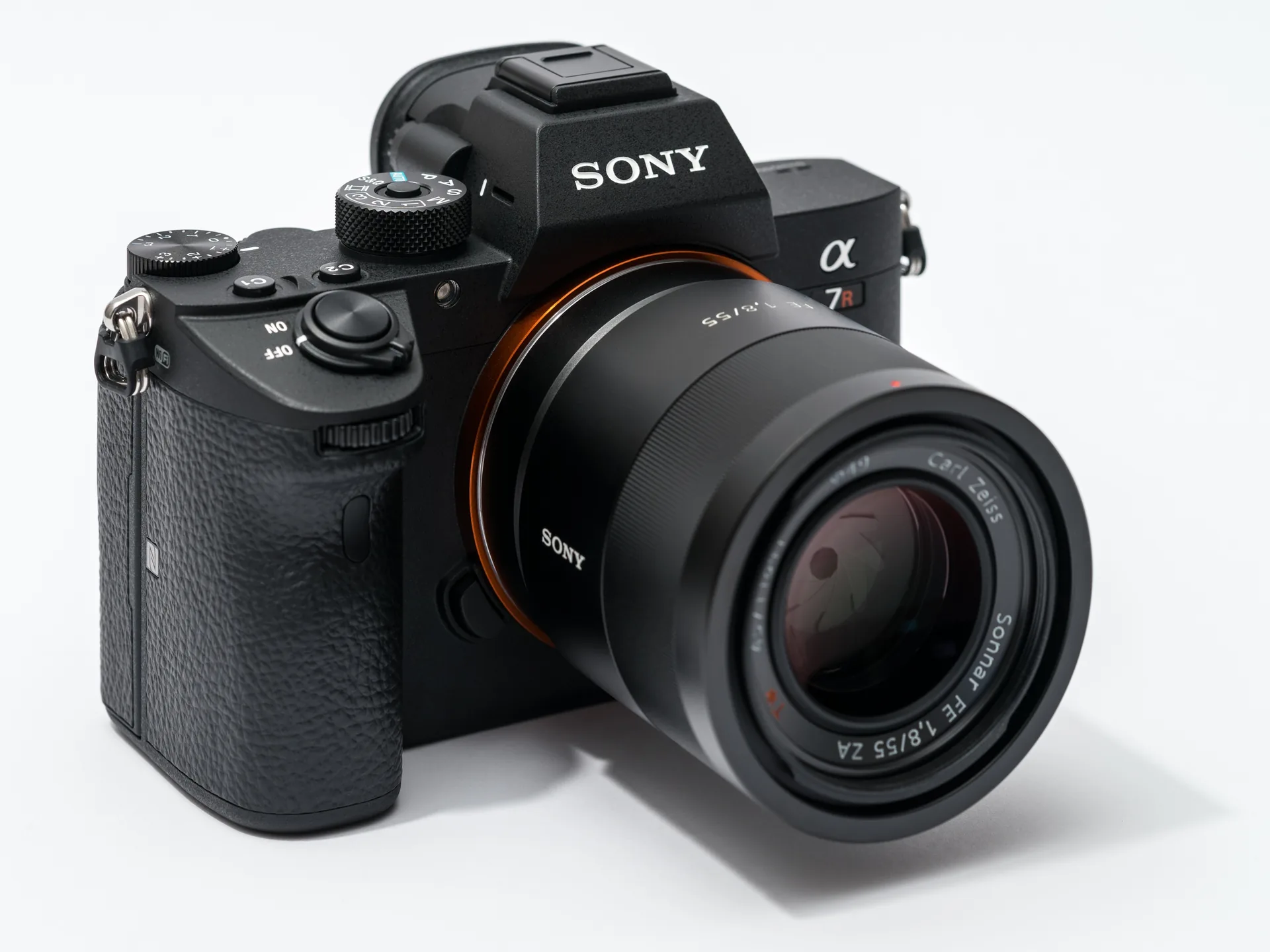
Sony's 2017 high-resolution full-frame body (ILCE-7RM3), now discontinued. Launched at $3,200 in 2017. Still worth it in 2026: yes, if you want 42MP files, fast bursts and in-body stabilization in one body.
Sony a7R III (ILCE-7RM3), shown with a lens (not included with the body). Photo: Jürgen Matern via Wikimedia Commons, CC BY-SA 4.0 (resized)
HIGHLIGHTS
Sony announced the a7R III on October 25, 2017, saying it would ship that November for $3,200 in the US. It paired a 42.4MP back-illuminated Exmor R full-frame sensor, with no optical low-pass filter, with a new front-end LSI and an updated BIONZ X processor. Sony's headline was speed at high resolution: up to 10 fps with full AF/AE tracking from either the mechanical or the silent shutter, with AF from 399 phase-detection and 425 contrast-detection points.
Why it exists. The a7R III moved Sony's high-resolution R line toward professional handling. It added dual card slots, the larger NP-FZ100 battery, an AF-ON button and a joystick, USB-C and a 3.69M-dot ZEISS-coated OLED finder, on top of 5.5-stop in-body stabilization and 4K from the full sensor width. Its Pixel Shift Multi Shooting mode combines four shifted frames into one 42.4MP image with more color detail, for still subjects. Sony Japan now lists it as discontinued, so this is a Classic.
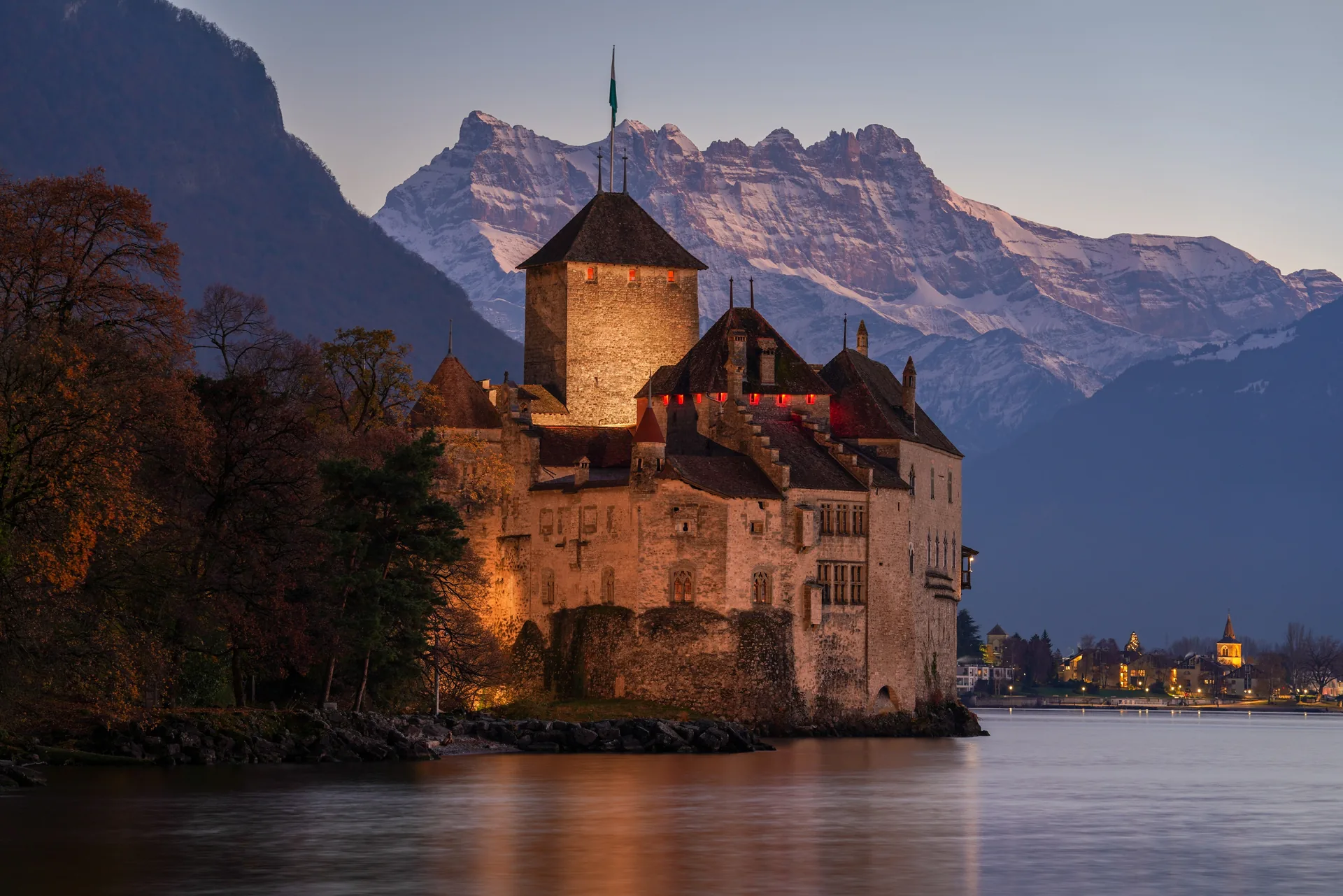
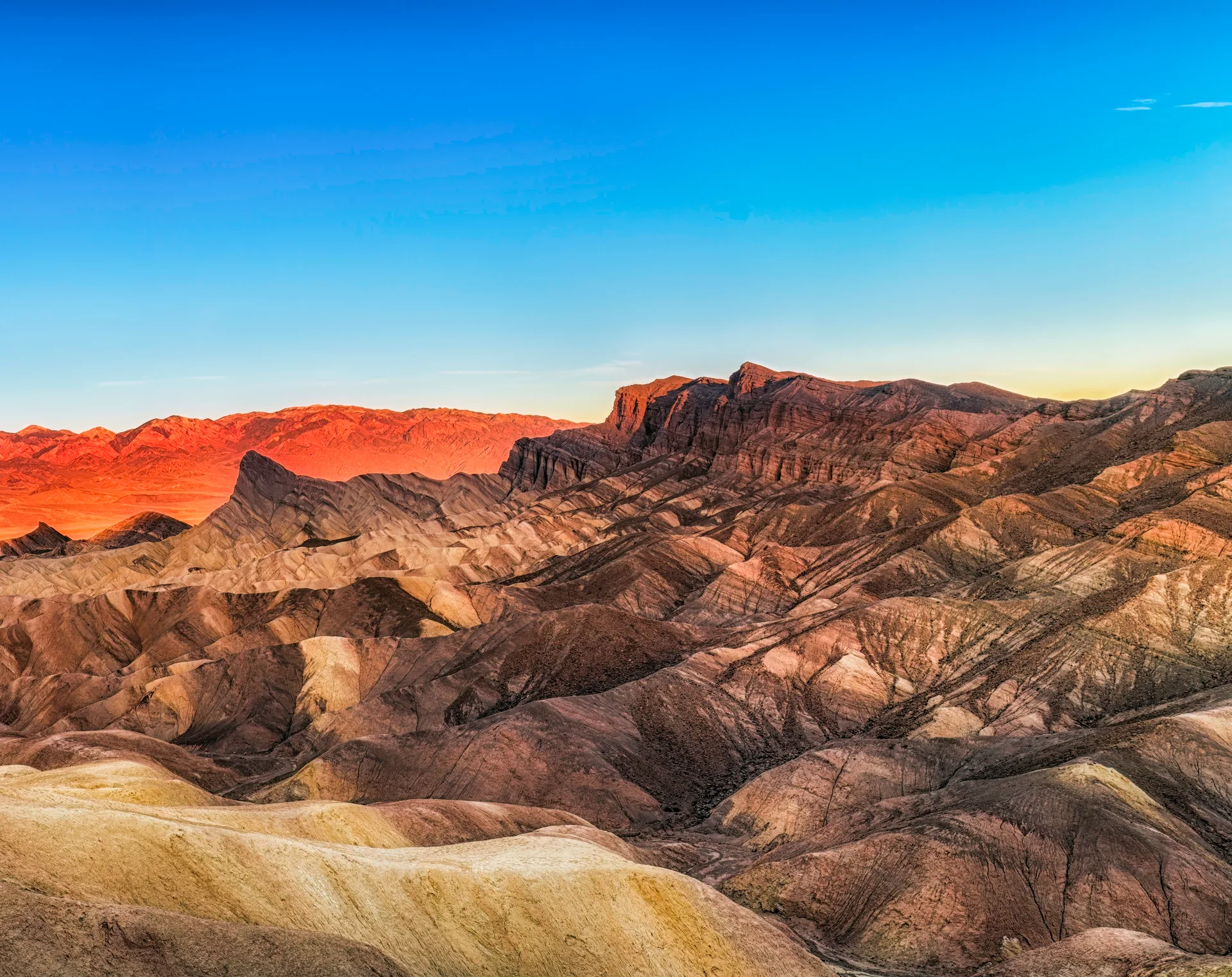
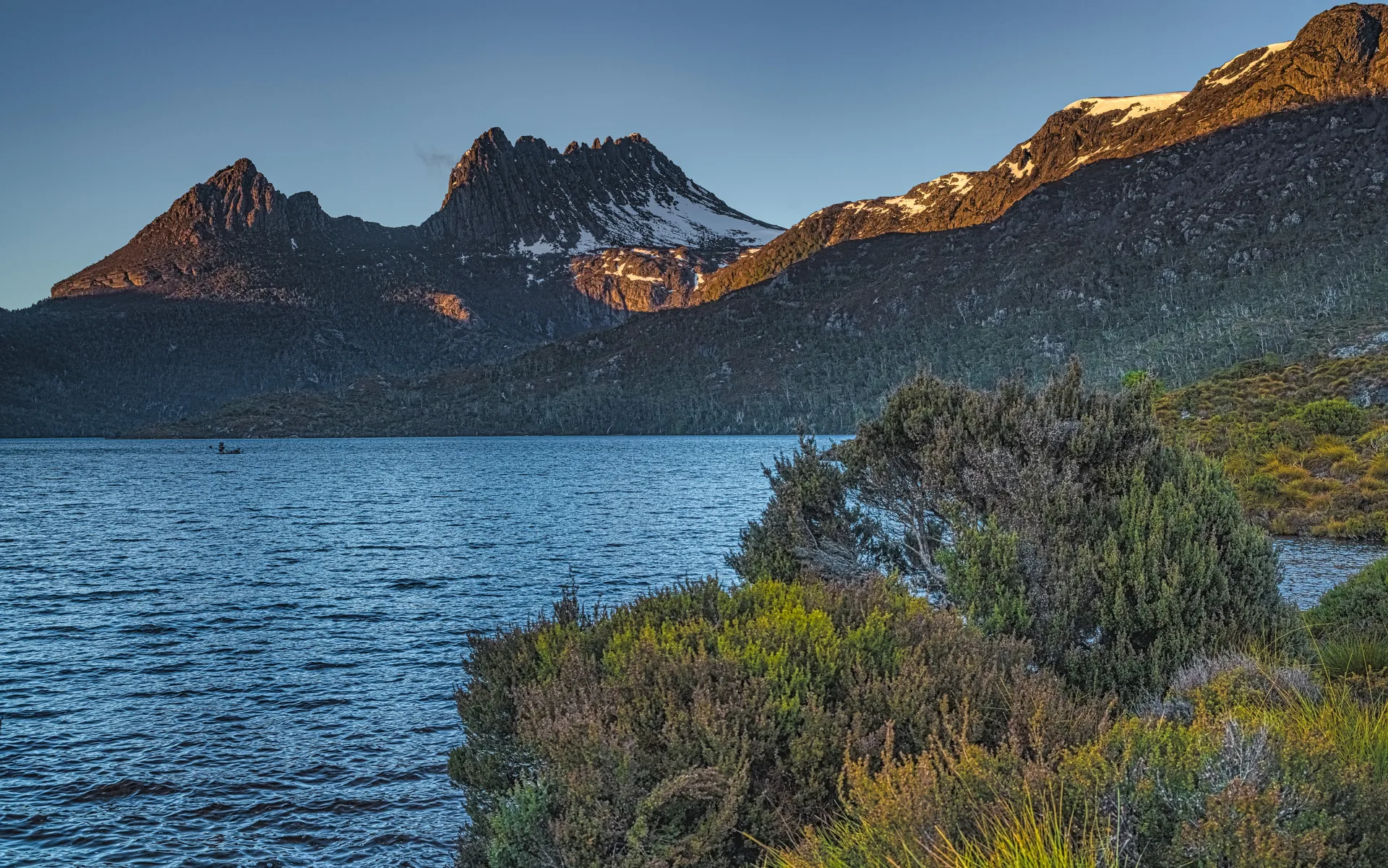
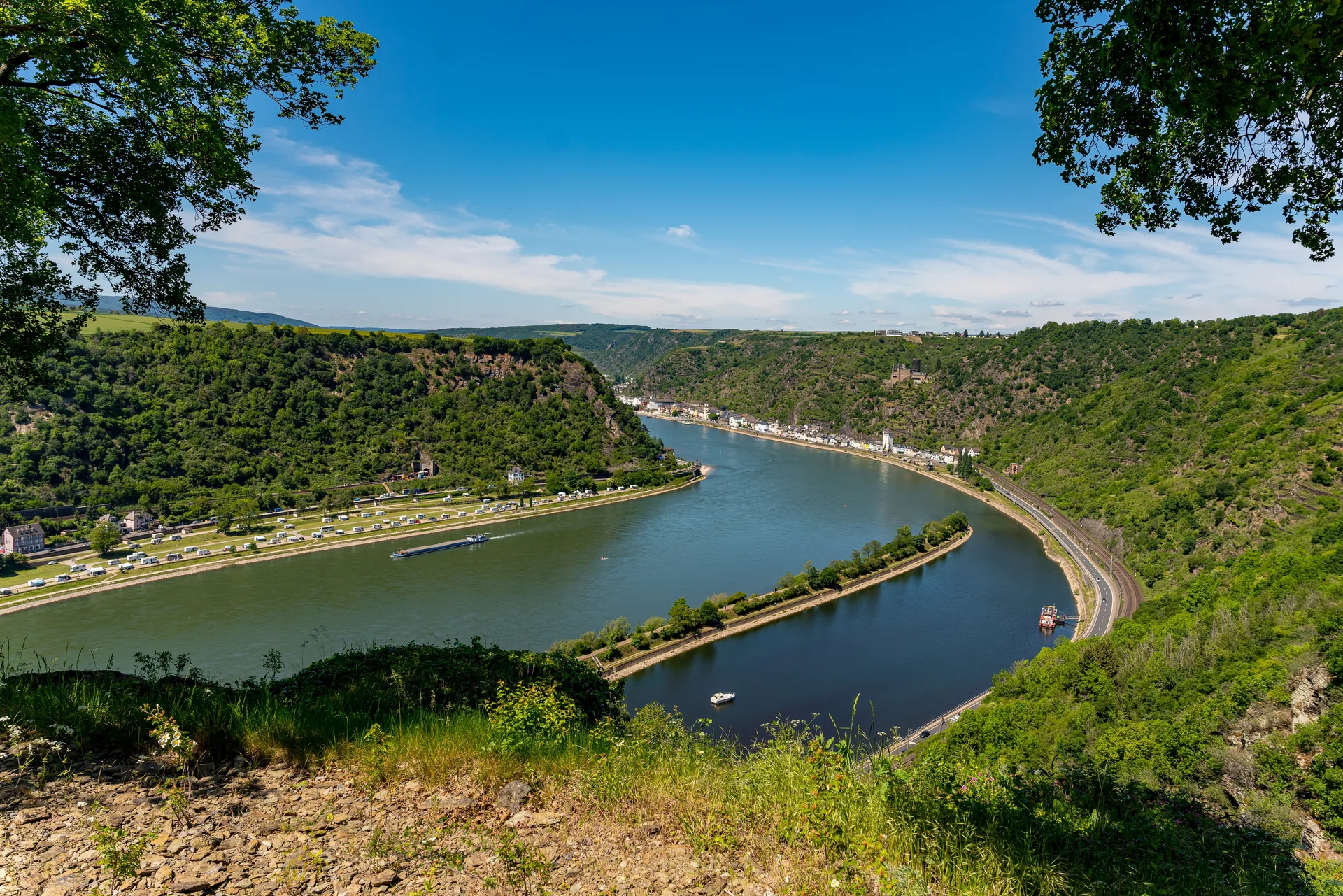
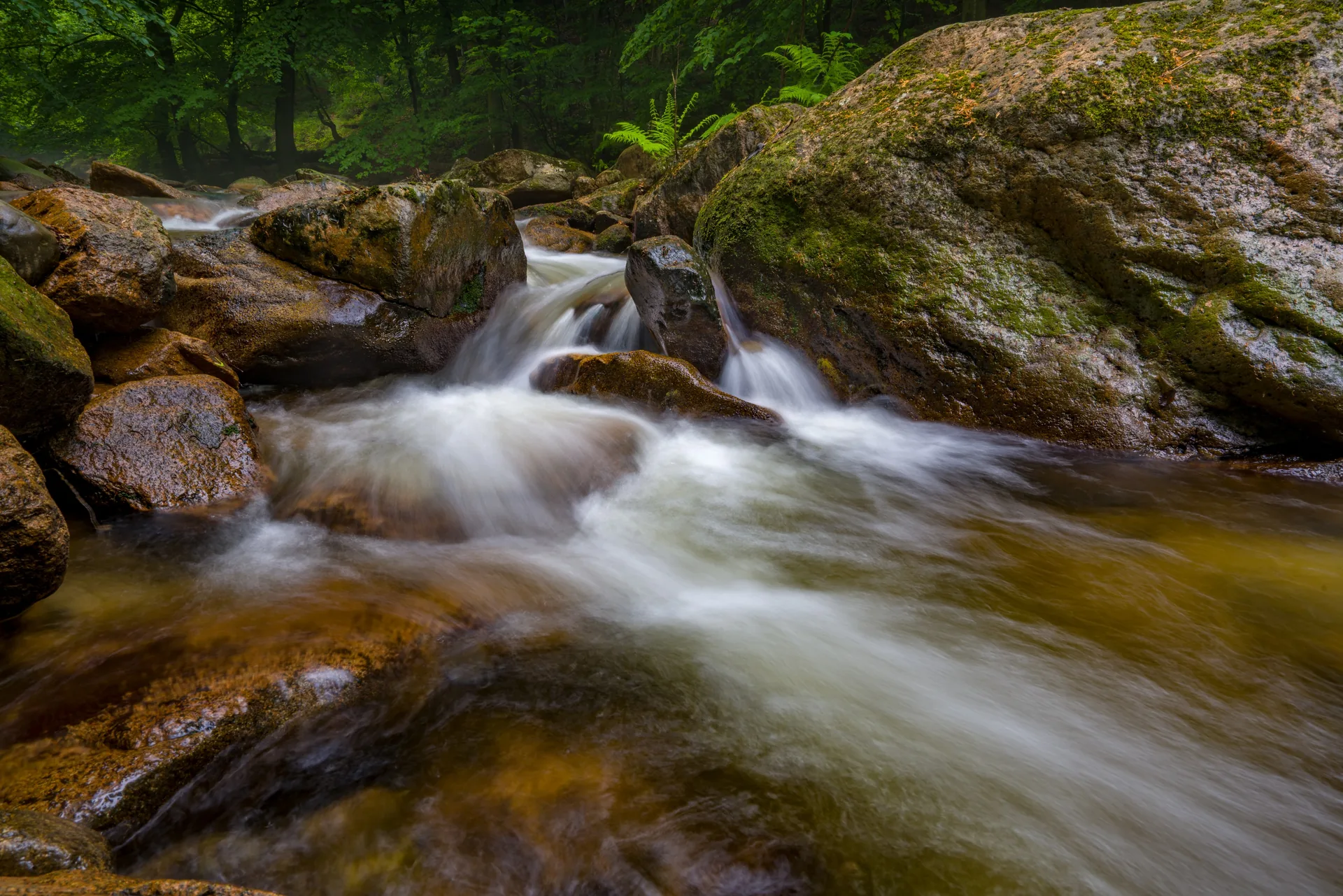
Our gallery comes from five photographers: the Château de Chillon at blue hour, layered desert badlands, Cradle Mountain in Tasmania, the Rhine at the Loreley, a long exposure of a river in the Harz and a harbor seal at Jökulsárlón. Still worth it in 2026? Yes, for landscape, architecture and detail work, and for anyone who wants high resolution without giving up 10 fps.
The story
Sony Electronics announced the a7R III on October 25, 2017, and said it would ship that November for $3,200 US and $4,000 CA (Sony Electronics, via PR Newswire).
The release set out the brief: the 42.4MP resolution of the a7R II, but with 10 fps shooting, a 15-stop dynamic range at low ISO (Sony test conditions) and Eye AF Sony rated about twice as effective as the a7R II's.
Sony Japan now marks the ILCE-7RM3 as discontinued (Sony Japan). The later ILCE-7RM3A is a separate model and is not covered here.
Specifications
Key specs for the Sony a7R III, from Sony Electronics' October 25, 2017 release and Sony Japan's ILCE-7RM3 specifications page. Source for each row in brackets.
Sensor
42.4MP effective (43.6MP total) back-illuminated Exmor R CMOS, 35.9 × 24.0 mm; no optical low-pass filter; front-end LSI + BIONZ X [Sony Electronics, Sony Japan]
ISO
100–32000 for stills; expandable to 50–102400 [Sony Japan]
Up to 10 fps with AF/AE tracking, mechanical or silent shutter; buffer about 76 JPEG/RAW or 28 uncompressed RAW [Sony Electronics]
Shutter
1/8000 s to 30 s, bulb; flash sync 1/250 s [Sony Japan]
Viewfinder
1.3 cm (0.5-type) OLED, 3,686,400 dots, 0.78x; ZEISS T* coating [Sony Electronics, Sony Japan]
Screen
3.0-type touch TFT, 1,440,000 dots; tilts up about 107°, down about 41° [Sony Japan]
Video
4K from the full sensor width; Super 35 4K oversampled from 5K; S-Log2, S-Log3, HLG; Full HD up to 120 fps [Sony Electronics]
Pixel Shift
4 shifted frames composited in Imaging Edge into one 42.4MP (7952 × 5304) image [Sony Electronics]
Cards / ports
Dual media slots (one UHS-II SD); USB Type-C, PC sync terminal, Wi-Fi [Sony Electronics]
Battery
NP-FZ100 (Z-series) [Sony Electronics]
Size / weight
126.9 × 95.6 × 73.7 mm; about 657 g with battery and card (about 572 g body only) [Sony Japan]
Announced / price
Oct 25, 2017; $3,200 US body-only [Sony Electronics]
Sample photos
Six photos taken with the Sony a7R III by five photographers, shared on Wikimedia Commons or Flickr under Creative Commons licenses or in the public domain. Each caption gives the settings the file records. Select a photo to enlarge it. More samples from Wikimedia Commons
f/5.6, ISO 100, 10 s, 155mm: the Château de Chillon and the Dents du Midi at blue hour. Photo: Giles Laurent via Wikimedia Commons, CC BY-SA 4.0 (resized)f/8, ISO 100, 18mm: layered desert badlands. Photo: David Zhang via Wikimedia Commons, CC BY-SA 2.0 (resized)
ISO 100, 1/50 s: Cradle Mountain, Tasmania (aperture and focal length not recorded). Photo: Christopher Harriot via Wikimedia Commons, CC BY 2.0 (resized)f/5.6, ISO 100, 1/500 s, 24mm: the Rhine at the Loreley. Photo: Holger Weinandt via Wikimedia Commons, CC BY-SA 4.0 (resized)
f/16, ISO 50, 0.8 s, 20mm: a rocky river in the Harz. Photo: salomon10 via Wikimedia Commons, CC BY 2.0 (resized)f/6.3, ISO 400, 1/1000 s, 600mm: a harbor seal at Jökulsárlón, Iceland. Photo: Giles Laurent via Wikimedia Commons, CC BY-SA 4.0 (resized)
Sony: Launched at $3,200 in 2017 (US, body only).
Verdict
Still worth it in 2026? Yes, for landscape, architecture and studio shooters who want 42.4MP files, and for anyone who wants high resolution with 10 fps bursts, 5.5-stop in-body stabilization and two card slots.
Look elsewhere if you need more resolution, both card slots on UHS-II or a higher-resolution finder: see the a7R IV.
Pros
42.4MP back-illuminated sensor with no low-pass filter
10 fps with AF/AE tracking
5.5-stop in-body stabilization (CIPA)
Dual card slots, NP-FZ100 battery, AF-ON button and joystick
Cons
Only one of the two slots is UHS-II
1.44M-dot rear screen tilts but does not flip out
Pixel Shift needs a still subject and desktop compositing