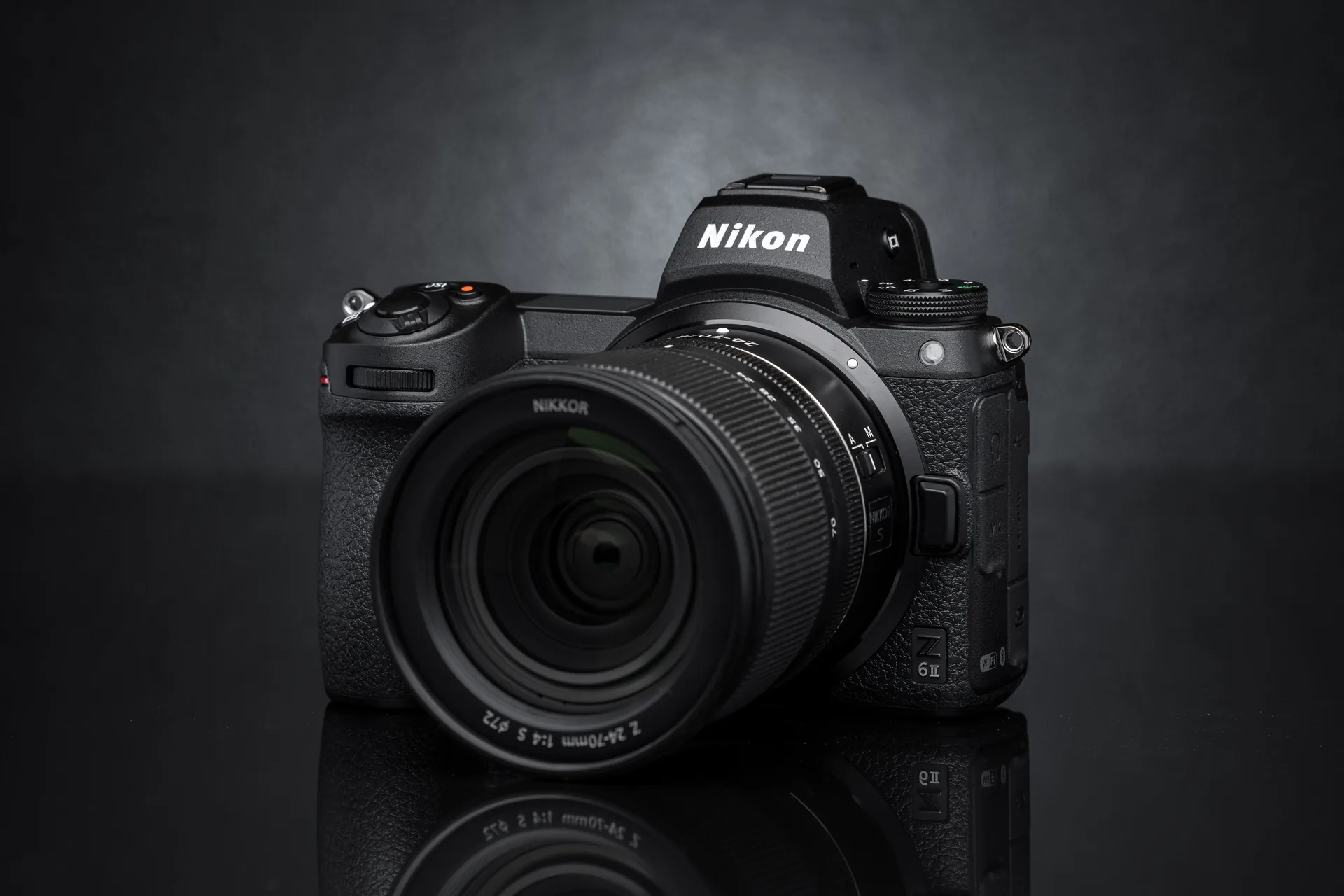
Nikon's 2020 all-round full-frame body, replaced by the Z6III. Launched at $1,999.95 body-only. Still worth it in 2026: yes, for full-frame Nikon Z with dual card slots.
Nikon Z6 II, shown with the NIKKOR Z 24-70mm f/4 S (not included with the body). Photo: Henry Söderlund via Wikimedia Commons, CC BY 2.0 (resized)
HIGHLIGHTS
Nikon announced the Z6 II on October 14, 2020 as a focused refresh of the original Z6. It kept the 24.5-megapixel full-frame sensor and added a second EXPEED 6 processor, which brought bursts up to about 14 fps with a buffer of up to about 124 shots, plus Eye and Animal Detection AF for both stills and video. It also added the second card slot many Z6 owners had asked for: one CFexpress/XQD slot and one UHS-II SD slot.
It's a capable hybrid body. It records 4K UHD and Full HD at up to 120p, with N-Log and HLG output, and has five-axis sensor-shift VR, a 3.69M-dot viewfinder and a 3.2-inch tilting touchscreen. Its 273-point AF works down to -6 EV in low-light AF mode. Nikon rates the EN-EL15c for about 400 viewfinder shots (CIPA). Those specs are a generation behind the Z6III, but they cover most stills, event and travel work.
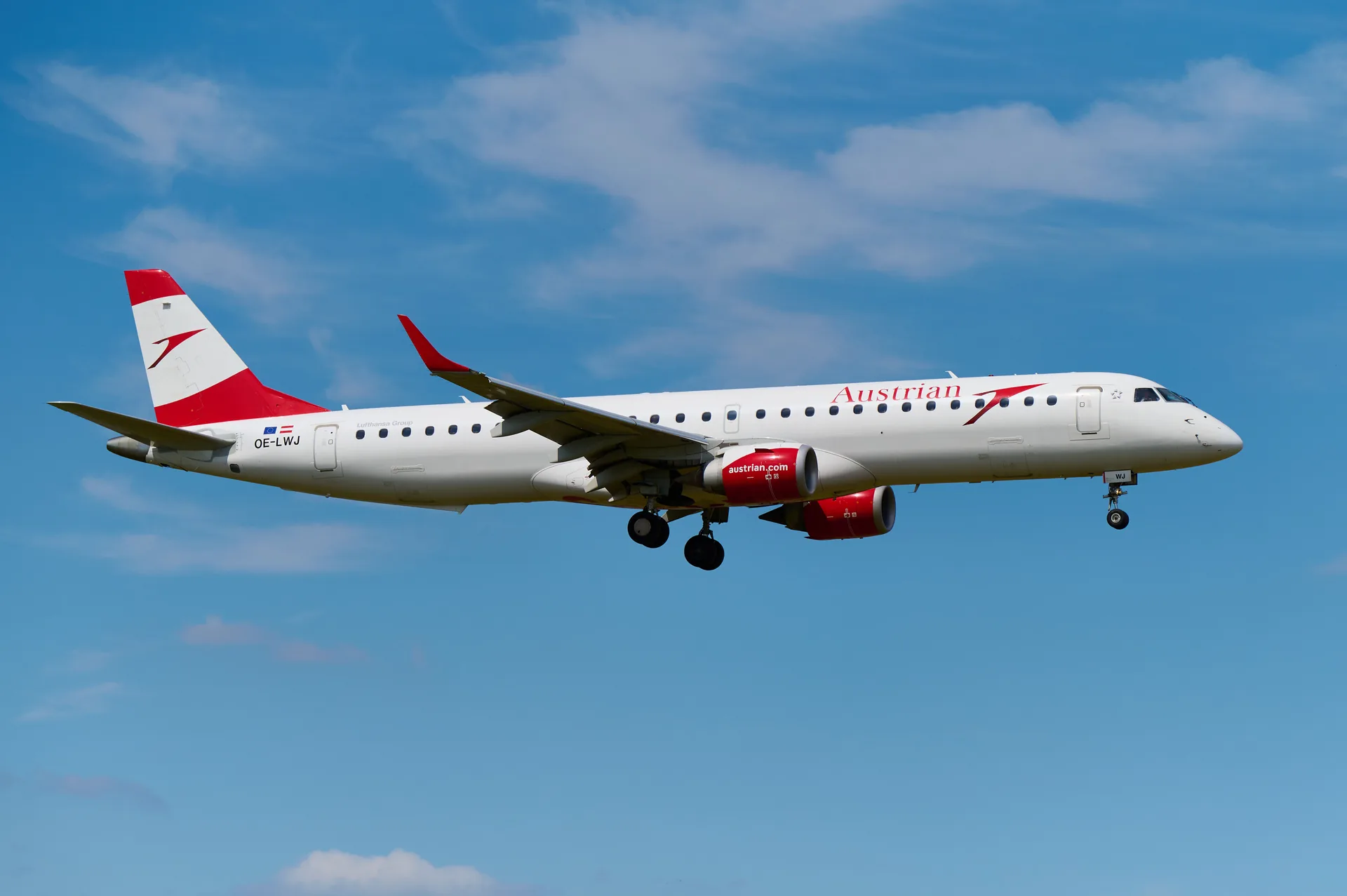
Our gallery comes from six photographers: a banded mongoose at Duisburg Zoo, a siskin among blossoms, an Embraer airliner on approach, Guatemala's Volcán Pacaya, a Czech lookout tower and an elder bush in woodland. Still worth it in 2026? Yes, if you want full-frame Nikon Z with dual card slots. If you shoot fast action or video, look at the Z6III.
The story
Nikon announced the Z6 II on October 14, 2020 at an SRP of $1,999.95 body-only, or $2,599.95 with the NIKKOR Z 24-70mm f/4 S, for availability in November 2020 (Nikon Inc.).
Nikon replaced it with the Z6III in June 2024.
Specifications
Key specs for the Nikon Z6 II, from Nikon's Z6 II product page and online manual specifications and Nikon Inc.'s October 14, 2020 release. Source for each row in brackets.
Sensor
24.5MP full-frame CMOS (35.9 × 23.9 mm) [Nikon]
Processor
Dual EXPEED 6 [Nikon]
ISO
100–51200; expandable to 50–204800 equivalent [Nikon]
Autofocus
Hybrid phase/contrast AF, 273 points; Eye and Animal Detection AF in stills and video; -4.5 to +19 EV (-6 EV with low-light AF) [Nikon]
Stabilization
5-axis sensor-shift VR [Nikon]
Bursts
Up to about 14 fps (Continuous H extended); buffer up to about 124 shots [Nikon]
Video
4K UHD; Full HD up to 120p; N-Log and HLG output [Nikon]
Viewfinder
0.5-inch OLED, about 3.69 million dots, 0.8x [Nikon]
Screen
3.2-inch tilting touchscreen, about 2.1 million dots [Nikon]
Card slots
One CFexpress Type B / XQD, one SD (UHS-II) [Nikon]
Battery
EN-EL15c; about 400 shots (viewfinder) / 450 (monitor), CIPA, energy saving on [Nikon]
Size / weight
134 × 100.5 × 69.5 mm; about 705 g with battery and card (615 g body only) [Nikon]
Announced / price
Oct 14, 2020; $1,999.95 SRP body-only [Nikon Inc.]
Sample photos
Six photos taken with the Nikon Z6 II by six photographers, shared on Wikimedia Commons under Creative Commons licenses or in the public domain. Each caption names the lens where the file records it. Select a photo to enlarge it.
200mm, f/4.5, ISO 100, 1/640 s: a banded mongoose at Duisburg Zoo (NIKKOR Z 70-200mm f/2.8 VR S). Photo: Tuxyso via Wikimedia Commons, CC BY-SA 4.0 (resized)500mm, f/8, ISO 3200, 1/640 s: a male siskin among blossoms (AF-S NIKKOR 500mm f/5.6E PF ED VR). Photo: cazalegg via Wikimedia Commons, CC BY 4.0 (resized)
135mm, f/5, ISO 200, 1/5000 s: Embraer airliner OE-LWJ on approach (NIKKOR Z 70-180mm f/2.8). Photo: Cezary Piwowarski via Wikimedia Commons, CC BY-SA 4.0 (resized)135mm, f/7.1, ISO 100, 1/400 s: Volcán Pacaya from Villa Nueva, Guatemala (NIKKOR 28-300mm f/3.5-5.6 VR). Photo: amslerPIX via Wikimedia Commons, CC BY 2.0 (resized)
24mm, f/13, ISO 200, 1/250 s: the Fajtův kopec lookout tower, Velké Meziříčí (NIKKOR Z 24-70mm f/4 S). Photo: Roman Mifek via Wikimedia Commons, CC BY-SA 4.0 (resized)An elder (Sambucus nigra) in a pine plantation, Osina, Poland (lens not recorded in the file). Photo: Krzysztof Ziarnek, Kenraiz via Wikimedia Commons, CC BY-SA 4.0 (resized)
Nikon: Launched at $1,999.95 in 2020 (SRP, body only). Replaced by the Z6III (Jun 2024).
Verdict
Still worth it in 2026? Yes, for stills, event and travel shooters who want full-frame Nikon Z, dual card slots and eye-detection AF.
Choose the Z6III instead if you shoot fast action or video: it adds 20 fps electronic bursts, AF to -10 EV, 8-stop VR and internal 6K RAW.
Pros
24.5MP full-frame sensor
About 14 fps with a buffer of up to about 124 shots